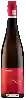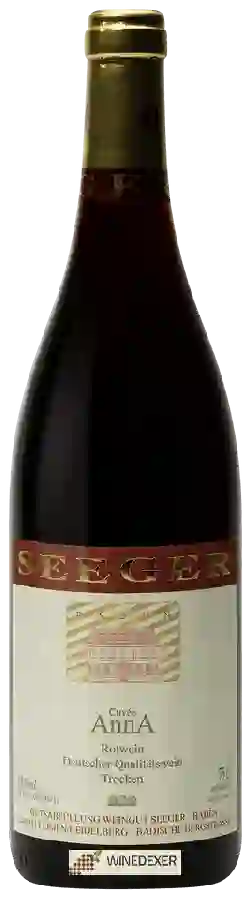
Weingut SeegerCuvée Anna Trocken
 Red wine


This wine generally goes well with vegetarian
The Cuvée Anna Trocken of the Weingut Seeger is in the top 60 of wines of Baden.

Wine flavors and olphactive analysis




On the nose the Cuvée Anna Trocken of Weingut Seeger in the region of Baden often reveals types of flavors of non oak, oak or spices and sometimes also flavors of red fruit, black fruit.
Food and wine pairings with Cuvée Anna Trocken
Pairings that work perfectly with Cuvée Anna Trocken

Original food and wine pairings with Cuvée Anna Trocken
The Cuvée Anna Trocken of Weingut Seeger matches generally quite well with dishes of vegetarian such as recipes of quiche without pastry.
Details and technical informations about Weingut Seeger's Cuvée Anna Trocken.
Discover the grape variety: Delaware
Simple reds and rosés with a characteristic foxy flavour — clear ruby to pink, soft tannins, moderate acidity and labrusca-signature aromas of wild strawberry, candy, fresh grape and rustic muscat notes. Grown in the north-eastern United States and massively exported to Japan, where it is used for juice, simple wines and table grapes. A hybrid discovered in 1849 in Delaware, Ohio.
Last vintages of this wine

The best vintages of Cuvée Anna Trocken from Weingut Seeger are 2013, 2017, 2016, 2011 and 0.
Informations about the Weingut Seeger
The Weingut Seeger is one of of the world's greatest estates. It offers 61 wines for sale in the of Baden to come and discover on site or to buy online.

The wine region of Baden
German capital of Pinot Noir (Spätburgunder): silky, fine reds with notes of red fruits, cherry, undergrowth and sweet spices, melted tannins. Round Grauburgunder (Pinot Gris), lively Weissburgunder, supple Müller-Thurgau, mineral Riesling. Germany's 3rd region (15,000 ha) in Baden-Württemberg facing Alsace, one of the country's warmest climates, volcanic soils at the Kaiserstuhl. Cradle of modern great German reds, elegant and fine.
The word of the wine: Varietal
Said of wine aromas that are reminiscent of fresh grapes. The most demonstrative example is certainly that of wines made from the Muscat grape variety.