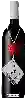
Winery Sea HorseRomain
 Red wine


This wine is a blend of 2 varietals which are the Mourvèdre and the Zinfandel.
This wine generally goes well with beef, lamb or mature and hard cheese.
The Romain of the Winery Sea Horse is in the top 10 of wines of Judean Hills.

Wine flavors and olphactive analysis




On the nose the Romain of Winery Sea Horse in the region of Judean Hills often reveals types of flavors of non oak, earth or microbio and sometimes also flavors of oak, tree fruit or spices.
Food and wine pairings with Romain
Pairings that work perfectly with Romain



Original food and wine pairings with Romain
The Romain of Winery Sea Horse matches generally quite well with dishes of beef, lamb or mature and hard cheese such as recipes of barbecue burger, marielle's lamb and eggplant parmentier or cake with smoked bacon, prunes and comté cheese.
Details and technical informations about Winery Sea Horse's Romain.
Discover the grape variety: Mourvèdre
Powerful, deep reds with firm tannins and dense texture, showing aromas of blackberry, leather, garrigue, black pepper, liquorice and animal notes (game, forest floor) with age. Star of Bandol AOC as a single variety and pillar of Châteauneuf-du-Pape, Gigondas and Costières blends. Also in GSM in Languedoc and Australia. A late-ripening variety of Spanish origin (Mataró/Monastrell).
Last vintages of this wine

The best vintages of Romain from Winery Sea Horse are 2014, 2012, 2016, 0 and 2015.
Informations about the Winery Sea Horse
The Winery Sea Horse is one of of the world's greatest estates. It offers 50 wines for sale in the of Judean Hills to come and discover on site or to buy online.

The wine region of Judean Hills
Qualitative heart of Israeli wine around Jerusalem, the country's first official AO (2020). Dense, structured reds with signature notes of ripe blackcurrant, blackberry, mint, eucalyptus, Mediterranean herbs and spice, firm tannins and freshness tightened by altitude. Cabernet Sauvignon and Merlot in Bordeaux blends. Also peppery Syrah, dense Petit Verdot.
The word of the wine: Chaptalization
The addition of sugar at the time of fermentation of the must, an ancient practice, but theorized by Jean-Antoine Chaptal at the dawn of the 19th century. The sugar is transformed into alcohol and allows the natural degree of the wine to be raised in a weak or cold year, or - more questionably - when the winegrower has a harvest that is too large to obtain good maturity.