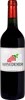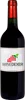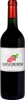
Winery SchnabelBlaufränkisch Hochegg
 Red wine


In the mouth this red wine is a powerful with a nice balance between acidity and tannins.
This wine generally goes well with poultry, beef or pasta.
Taste structure of the Blaufränkisch Hochegg from the Winery Schnabel
Light | Bold | |
Smooth | Tannic | |
Dry | Sweet | |
Soft | Acidic |
In the mouth the Blaufränkisch Hochegg of Winery Schnabel in the region of Weinland is a powerful with a nice balance between acidity and tannins.
Wine flavors and olphactive analysis




On the nose the Blaufränkisch Hochegg of Winery Schnabel in the region of Weinland often reveals types of flavors of earth, red fruit or black fruit.
Food and wine pairings with Blaufränkisch Hochegg
Pairings that work perfectly with Blaufränkisch Hochegg



Original food and wine pairings with Blaufränkisch Hochegg
The Blaufränkisch Hochegg of Winery Schnabel matches generally quite well with dishes of beef, pasta or poultry such as recipes of korean bibimbap, generous flaky quiche or chicken curry (like in reunion island).
Details and technical informations about Winery Schnabel's Blaufränkisch Hochegg.
Discover the grape variety: Gold
Intraspecific crossing between A 3-94 (Hamburg Muscat x Sultana) and California K 3-78 (Hamburg Muscat x Queen of the Vines) obtained in the United States (California) in 1958 by Harold Paul Olmo (1909/2006). It can also be found in Greece, Cyprus, etc.
Last vintages of this wine

The best vintages of Blaufränkisch Hochegg from Winery Schnabel are 2015, 2013, 2011, 0 and 2014.
Informations about the Winery Schnabel
The Winery Schnabel is one of of the world's greatest estates. It offers 4 wines for sale in the of Burgenland to come and discover on site or to buy online.

The wine region of Burgenland
Burgenland is a large wine-producing region on the eastern border of Austria. Despite the country's image as the producer of some of the world's finest white wines, Austria is also home to a thriving red wine culture: Burgenland, with its sunny, continental summers, is the country's key red wine region, with its wines based mainly on the Blaufränkisch and Zweigelt grape varieties. Sweet, botrytized wines are also a specialty of the region, particularly in the Terroir surrounding the Neusiedlersee lake. The region occupies a narrow strip of land that runs from the Danube River down to Steiermark in the South.
The wine region of Weinland
Weinviertel DAC – whose name translates as "wine quarter" – is an appellation in Niederösterreich (Lower Austria). It is by far the largest Districtus Austriae Controllatus wine region in Austria. It was also the first Austrian wine region to be given that title, in 2002, with a DAC Reserve designation added in 2009. The designation applies only to white wines from the Grüner Veltliner Grape variety.
The word of the wine: Sulphating
Treatment, formerly practiced with copper sulfate, applied to the vine to prevent cryptogamic diseases.