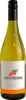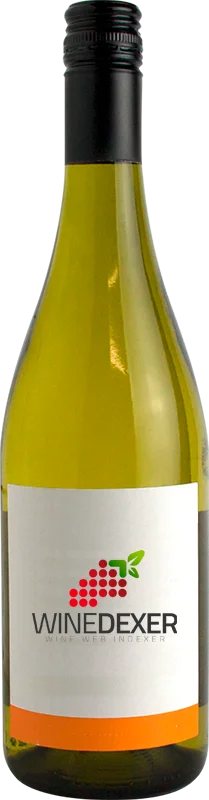
Winery Schmitt BergtheimBergtheimer Harfenspiel Weisser Burgunder Kabinett
 White wine



This wine generally goes well with
Details and technical informations about Winery Schmitt Bergtheim's Bergtheimer Harfenspiel Weisser Burgunder Kabinett.
Discover the grape variety: Fer
Fer or Fer Servadou, which means "easy to keep" in Occitan, or Mansois in Aveyron or Braucol in Gaillac, is a black grape variety grown in the southwest. It owes its name to its shoots and wood, which are "hard as iron", with medium-sized bunches and firm, juicy berries, and is characterized by its herbaceous taste (which is also found in Cabernet Franc). Iron is a grape variety resistant to frost and disease. Its buds come out late, but its growth accelerates and it matures quite quickly. For a good production, it prefers long pruning. Iron is used alone for the AOC Marcillac wines and in blends for the wines of the Gaillac, Madiran, Béarn and Fronton appellations. These wines have a deep colour, expressive tannins, they are round and fruity (blackcurrant, raspberry and green pepper...)
Last vintages of this wine
The best vintages of Bergtheimer Harfenspiel Weisser Burgunder Kabinett from Winery Schmitt Bergtheim are 0
Informations about the Winery Schmitt Bergtheim
The Winery Schmitt Bergtheim is one of of the world's greatest estates. It offers 40 wines for sale in the of Rheinhessen to come and discover on site or to buy online.

The wine region of Rheinhessen
Rheinhessen is Germany's largest region for producing the quality wines of the Qualitätswein bestimmter Anbaugebiete (QbA) and Prädikatswein designations, with roughly 26,500 hectares (65,000 acres) of Vineyard">Vineyards as of 2014. Many of its most significant viticultural areas are favorably influenced by the Rhine river, which runs aLong its North and eastern borders. The Rhine, along with the Nahe river to the west and the Haardt mountains to its South, form a natural border. Rheinhessen covers an area south of Rheingau, north of Pfalz and east of Nahe, and is located within the Rhineland-Palatinate federal state.
The word of the wine: Chaptalization
The addition of sugar at the time of fermentation of the must, an ancient practice, but theorized by Jean-Antoine Chaptal at the dawn of the 19th century. The sugar is transformed into alcohol and allows the natural degree of the wine to be raised in a weak or cold year, or - more questionably - when the winegrower has a harvest that is too large to obtain good maturity.