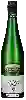
Winery Schloss GobelsburgSt. Laurent Haidegrund
 Red wine


This wine generally goes well with

Wine flavors and olphactive analysis



On the nose the St. Laurent Haidegrund of Winery Schloss Gobelsburg in the region of Weinland often reveals types of flavors of non oak, earth or microbio and sometimes also flavors of oak, black fruit.
Details and technical informations about Winery Schloss Gobelsburg's St. Laurent Haidegrund.
Discover the grape variety: Othello
Colourful reds with the characteristic foxy taste of Vitis labrusca, a sustained ruby robe, soft tannins and an airy palate, with typical labruscoid aromas (wild strawberry, candy). In France, it is among the six hybrids banned since 1935 (with Clinton, Herbemont, Isabelle, Jacquez, Noah), still found in heritage trellises. French black hybrid obtained by Henri Bouschet (folle blanche × clinton).
Last vintages of this wine

The best vintages of St. Laurent Haidegrund from Winery Schloss Gobelsburg are 2005, 2010, 0, 2011 and 2009.
Informations about the Winery Schloss Gobelsburg
The Winery Schloss Gobelsburg is one of of the world's great estates. It offers 67 wines for sale in the of Niederösterreich to come and discover on site or to buy online.

The wine region of Niederösterreich
Homeland of Grüner Veltliner: Austria's signature dry whites, lively, peppery ("Pfefferl"), with notes of citrus, green apple, fennel and fine minerality, from crunchy everyday to great age-worthy bottles on lees. Taut, precise Riesling on the Wachau terraces (UNESCO). Quieter reds: supple Zweigelt with red fruit. Subregions: Wachau, Kremstal, Kamptal, Wagram, Weinviertel.
The wine region of Weinland
Vast German-speaking region in north-eastern Switzerland, the country's largest production area. Signature Pinot Noir (Blauburgunder): fine, fresh reds with notes of cherry, raspberry, undergrowth and sweet spices, silky tannins. Elegant, delicate style, often barrel-aged. Also light, floral Müller-Thurgau (Riesling-Sylvaner), lively, lemony native Räuschling, ample Pinot Gris.
The word of the wine: New wine
Wine of the year, fruity and easy to drink. Beaujolais Nouveau is not the only one in this category, the Côtes-du-Rhône, Touraine and Gaillac appellations also produce new wines.