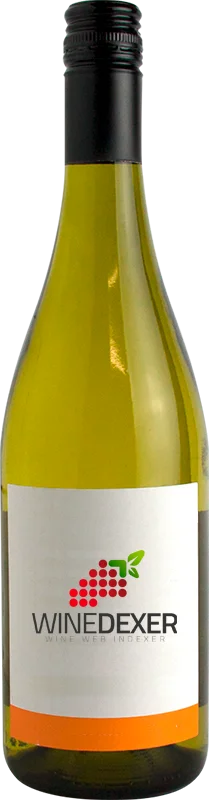
Winery Scherner - KleinhanssWeissburgunder
 White wine
In the mouth this white wine is a with a nice freshness.
This wine generally goes well with rich fish (salmon, tuna etc), shellfish or mild and soft cheese.

Taste structure of the Weissburgunder from the Winery Scherner - Kleinhanss
Light | Bold | |
Dry | Sweet | |
Soft | Acidic |
In the mouth the Weissburgunder of Winery Scherner - Kleinhanss in the region of Rheinhessen is a with a nice freshness.
Food and wine pairings with Weissburgunder
Pairings that work perfectly with Weissburgunder



Original food and wine pairings with Weissburgunder

The Weissburgunder of Winery Scherner - Kleinhanss matches generally quite well with dishes of rich fish (salmon, tuna etc), shellfish or mild and soft cheese such as recipes of congolese pondu, barbecued lobster or cannelloni of meat.
Details and technical informations about Winery Scherner - Kleinhanss's Weissburgunder.
Discover the grape variety: Alicante Nera
Intensely coloured reds with a red dyeing pulp, a deep purple robe, supple tannins and an ample palate with moderate acidity, featuring aromas of red fruits, black fruits and southern notes. Grown in southern Italy (Puglia, Calabria, Sardinia), Portugal and Spain, used to deepen the colour of blends and produce approachable reds. Italian synonym for Alicante Henri Bouschet, a French red-pulp teinturier black variety.
Informations about the Winery Scherner - Kleinhanss
The Winery Scherner - Kleinhanss is one of of the world's greatest estates. It offers 29 wines for sale in the of Rheinhessen to come and discover on site or to buy online.

The wine region of Rheinhessen
71% white region: Riesling is king (5,000 ha), dry to off-dry, ripe yellow fruit, apple, citrus and fine saline minerality. Supple, floral Müller-Thurgau for everyday, the world's largest Silvaner plantation with herbaceous, straight notes. Historic cradle of off-sweet Liebfraumilch. Some supple reds (Dornfelder, Spätburgunder).
The word of the wine: Aroma
A pleasant smell that can be primary (or varietal, i.e. characteristic of the grape), secondary (resulting from fermentation) or tertiary (resulting from the aging of the wine in the bottle).