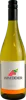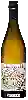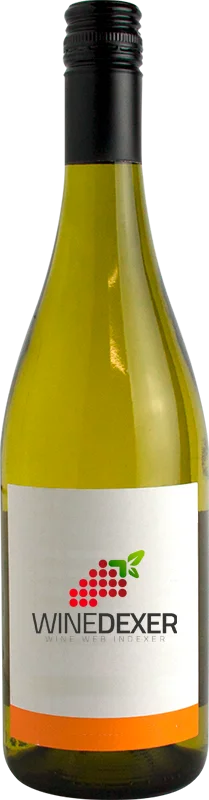
Winery Schenk SiebertSauvignon Blanc Trocken
 White wine
In the mouth this white wine is a with a nice freshness.
This wine generally goes well with vegetarian, shellfish or goat cheese.
Taste structure of the Sauvignon Blanc Trocken from the Winery Schenk Siebert
Light | Bold | |
Dry | Sweet | |
Soft | Acidic |
In the mouth the Sauvignon Blanc Trocken of Winery Schenk Siebert in the region of Pfalz is a with a nice freshness.
Food and wine pairings with Sauvignon Blanc Trocken
Pairings that work perfectly with Sauvignon Blanc Trocken



Original food and wine pairings with Sauvignon Blanc Trocken
The Sauvignon Blanc Trocken of Winery Schenk Siebert matches generally quite well with dishes of shellfish, vegetarian or goat cheese such as recipes of fish paella, ham and comté quiche or lasagne with salmon, goat cheese and spinach.
Details and technical informations about Winery Schenk Siebert's Sauvignon Blanc Trocken.
Discover the grape variety: Baco blanc
Interspecific crossing obtained in 1898 by François Baco (1865-1947) between the folle blanche and the noah, which it resembles somewhat. With the latter, Baco blanc is distinguished by a light beige felt under the leaf, whereas it is white for the noah. It is registered in the Official Catalogue of wine grape varieties list A1.
Informations about the Winery Schenk Siebert
The Winery Schenk Siebert is one of of the world's great estates. It offers 68 wines for sale in the of Pfalz to come and discover on site or to buy online.

The wine region of Pfalz
Pfalz is a key wine producing region in western Germany, located between the Rhein/Rhine river and the low-lying Haardt mountain range (a natural continuation of the Alsatian Vosges). It covers a rectangle of land 45 miles (75km) Long and 15 miles (25km) wide. To the NorthLiesRheinhessen; to the South, the French border and Alsace. In terms of both quality and quantity, Pfalz is one of Germany's most important regions, and one which shows great promise for the future.
The word of the wine: Erinosis
Generally benign condition caused by a very small mite. The infested leaves show blisters on the upper surface, sometimes reddish, sometimes green, to which corresponds on the lower surface a dense felting, first pinkish white, then brownish or reddish.