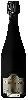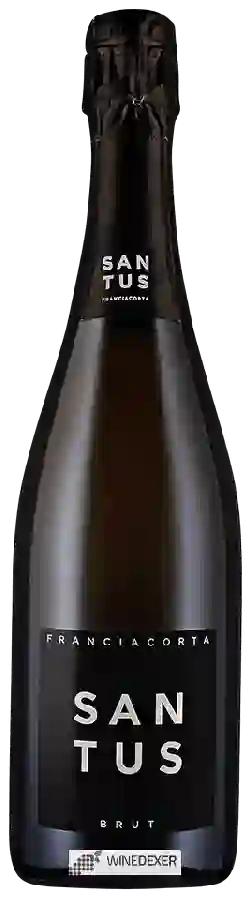
Winery SantusFranciacorta Brut
 Sparkling wine



This wine is composed of 100% of the grape variety Pinot Nero.
This wine generally goes well with pork, vegetarian or poultry.

Wine flavors and olphactive analysis

On the nose the Franciacorta Brut of Winery Santus in the region of Lombardia often reveals types of flavors of microbio.
Food and wine pairings with Franciacorta Brut
Pairings that work perfectly with Franciacorta Brut



Original food and wine pairings with Franciacorta Brut



The Franciacorta Brut of Winery Santus matches generally quite well with dishes of beef, lamb or pork such as recipes of melt-in-the-mouth pork tenderloin casserole, lamb mouse with figs and grapes or nanie's diced ham quiche.
Details and technical informations about Winery Santus's Franciacorta Brut.
Discover the grape variety: Chardonnay
Whites with many faces: mineral and taut at Chablis (lemon, green apple, flint), opulent and buttery at Meursault and Puligny-Montrachet (hazelnut, brioche, yellow fruits), tense and chalky in Champagne (Blanc de Blancs). Also vinified sparkling and widely exported (Sonoma, Margaret River, Casablanca). A Burgundian variety, a cross of Pinot Noir × Gouais Blanc, half-sibling of Aligoté.
Last vintages of this wine
The best vintages of Franciacorta Brut from Winery Santus are 2015, 0, 2012, 2011
Informations about the Winery Santus
The Winery Santus is one of of the world's greatest estates. It offers 5 wines for sale in the of Franciacorta to come and discover on site or to buy online.

The wine region of Franciacorta
The Italian Champagne, the country's largest DOCG zone for classic-method sparklers. Fine, refined bubbles with signature notes of green apple, citrus, brioche, toasted almond and white flowers, taut and creamy finish (18 months minimum on lees, up to 60 for Riserva). Based on dominant Chardonnay, Pinot Noir for structure, Pinot Blanc for roundness. Satèn (low pressure, silky) and fruity rosé versions.
The wine region of Lombardia
Three poles. Franciacorta DOCG, Italy's answer to Champagne: elegant brioche traditional-method sparklers (Chardonnay, Pinot Noir, Pinot Blanc), fine bubble and mineral profile. Alpine Valtellina: Nebbiolo (alias Chiavennasca) with fine tannins and red fruits, powerful Sforzato passito. Oltrepò Pavese: fresh Pinot Noir and fruity-sparkling Bonarda.
The word of the wine: Flavours
There are generally four so-called fundamental flavours: acidity, bitterness, sweetness and saltiness. The first three are considered to be the building blocks of the structure of wines. They are perceived by the taste buds that cover the surface of the tongue.