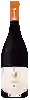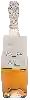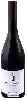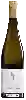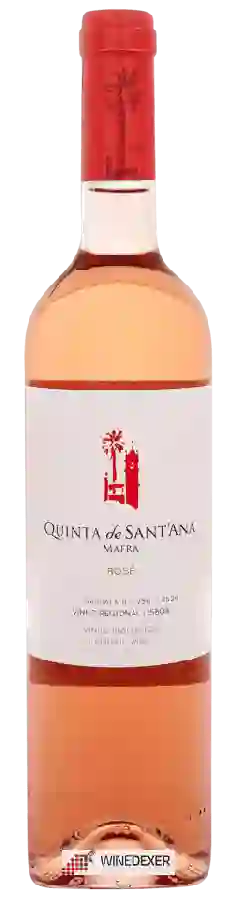
Winery Quinta de Sant'AnaRosé
 Pink wine



This wine is a blend of 3 varietals which are the Pinot noir, the Touriga nacional and the Merlot.
This wine generally goes well with pork, poultry or beef.

Wine flavors and olphactive analysis




On the nose the Rosé of Winery Quinta de Sant'Ana in the region of Lisboa often reveals types of flavors of earth, microbio or vegetal and sometimes also flavors of tree fruit, red fruit.
Food and wine pairings with Rosé
Pairings that work perfectly with Rosé



Original food and wine pairings with Rosé



The Rosé of Winery Quinta de Sant'Ana matches generally quite well with dishes of beef, veal or pork such as recipes of spaghetti with beef balls, cutlets with portuguese sauce or pasta "carbonara" à la française.
Details and technical informations about Winery Quinta de Sant'Ana's Rosé.
Discover the grape variety: Pinot noir
Elegant reds, light in colour with silky tannins, showing strawberry, cherry and raspberry aromas, evolving to forest floor, mushroom and spice with age. Fresh acidity, delicate finish. Star of the Côte d'Or (Romanée-Conti, Chambertin, Volnay), pillar of Champagne (Blanc de Noirs) and signature of Oregon, Central Otago and Sonoma Coast. An early-ripening Burgundian variety, one of the world's greatest.
Last vintages of this wine
The best vintages of Rosé from Winery Quinta de Sant'Ana are 2010, 2018, 2016, 2012 and 0.
Informations about the Winery Quinta de Sant'Ana
The Winery Quinta de Sant'Ana is one of of the world's greatest estates. It offers 22 wines for sale in the of Lisboa to come and discover on site or to buy online.

The wine region of Lisboa
Vast coastal IGP north of Lisbon, Portugal's largest producer by volume. Accessible, sun-filled reds: fruity, spicy Castelão, dense Touriga Nacional (black fruit, violet), fleshy Trincadeira, deep Alicante Bouschet. Fresh, mineral whites: straight, lemony Arinto (star of Bucelas), aromatic Fernão Pires, round Vital and Malvasia. Structured reds from Alenquer, sparkling at Óbidos.
The word of the wine: Table wine
A category of wine with no geographical indication on the label, often resulting from blends between wines from different vineyards in France or the EU. These wines are now called "wines without geographical indication" (and "French wines" if they come from the national territory).