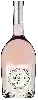
Winery Sainte MagdelaineRosé
 Pink wine


In the mouth this pink wine is a with a nice freshness.
This wine generally goes well with vegetarian, appetizers and snacks or lean fish.

Taste structure of the Rosé from the Winery Sainte Magdelaine
Light | Bold | |
Dry | Sweet | |
Soft | Acidic |
In the mouth the Rosé of Winery Sainte Magdelaine in the region of Pays d'Oc is a with a nice freshness.
Food and wine pairings with Rosé
Pairings that work perfectly with Rosé



Original food and wine pairings with Rosé


The Rosé of Winery Sainte Magdelaine matches generally quite well with dishes of pasta, vegetarian or appetizers and snacks such as recipes of capellini with vegetables, quiche lorraine or jars of sweet and sour pickles.
Details and technical informations about Winery Sainte Magdelaine's Rosé.
Discover the grape variety: Pinot lièbault
Supple and fruity reds with a ruby hue, smooth tannins and an airy palate with fresh acidity, featuring signature aromas of red fruits (cherry, raspberry), floral notes and gentle spices. Burgundian profile, later and more productive than classic Pinot Noir. Now almost extinct, it survives in a few old Burgundy vines and in variety conservation collections. Ancient variety of Pinot Noir selected by Charles Liébault in the 19th century in Burgundy.
Last vintages of this wine
The best vintages of Rosé from Winery Sainte Magdelaine are 2016
Informations about the Winery Sainte Magdelaine
The Winery Sainte Magdelaine is one of of the world's greatest estates. It offers 8 wines for sale in the of Pays d'Oc to come and discover on site or to buy online.

The wine region of Pays d'Oc
The single-grape IGP par excellence: modern, accessible, frank and fruity wines, the popular signature of the Midi. Spicy Syrah reds (pepper, blackberry), round Merlot, structured Cabernet, generous Grenache, supple Cinsault. Crisp, tangy rosés. Opulent Chardonnay whites, lively Sauvignon, floral, apricoty Viognier.
The word of the wine: Natural sweet wine
Wine obtained by mutage with wine alcohol of the must in the course of fermentation, from the Muscat, Grenache, Macabeu and Malvoisie grape varieties, and corresponding to strict conditions of production, richness and elaboration.