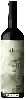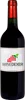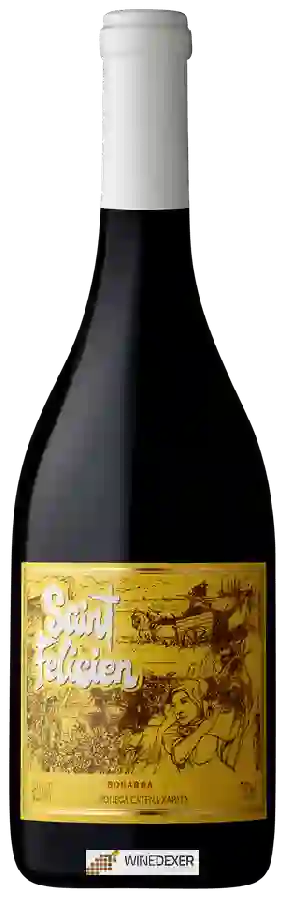
Winery Saint FelicienBonarda
 Red wine


In the mouth this red wine is a powerful with a nice freshness.
This wine generally goes well with pork, poultry or veal.

Taste structure of the Bonarda from the Winery Saint Felicien
Light | Bold | |
Smooth | Tannic | |
Dry | Sweet | |
Soft | Acidic |
In the mouth the Bonarda of Winery Saint Felicien in the region of Mendoza is a powerful with a nice freshness.
Wine flavors and olphactive analysis



On the nose the Bonarda of Winery Saint Felicien in the region of Mendoza often reveals types of flavors of non oak, earth or oak and sometimes also flavors of spices, red fruit or black fruit.
Food and wine pairings with Bonarda
Pairings that work perfectly with Bonarda



Original food and wine pairings with Bonarda

The Bonarda of Winery Saint Felicien matches generally quite well with dishes of veal, pork or game (deer, venison) such as recipes of veal liver in vinegar, potjevleesch or duck aiguillettes.
Details and technical informations about Winery Saint Felicien's Bonarda.
Discover the grape variety: Cannonau
Powerful, sun-drenched reds with a dark ruby robe, fleshy tannins and a dense palate, showing signature aromas of ripe red fruits (cherry, blackberry), plum, Mediterranean garrigue, spice, pepper and balsamic notes. Fine ageing potential; also vinified as rosé and sweet wines. The undisputed star of Cannonau di Sardegna DOC, the identity signature of the island. The Sardinian synonym for Spanish and French Grenache, a grape found throughout the western Mediterranean.
Last vintages of this wine

The best vintages of Bonarda from Winery Saint Felicien are 2016, 2018, 2013, 2015 and 0.
Informations about the Winery Saint Felicien
The Winery Saint Felicien is one of of the world's great estates. It offers 28 wines for sale in the of Mendoza to come and discover on site or to buy online.

The wine region of Mendoza
World capital of Malbec: powerful, deep reds with blackberry, plum, violet and sweet spice, round tannins and vivid fruit. Also firm Cabernet Sauvignon, supple, juicy Bonarda, aromatic floral white Torrontés. High-altitude vineyards (800-1,700 m) at the foot of the Andes, dry continental climate irrigated by glacial waters. ~80% of Argentine output across 150,000 ha.
The word of the wine: Thinning
Also known as green harvesting, the practice of removing excess bunches of grapes from certain vines, usually in July, but sometimes later. This is often necessary, but not always a good thing, as the remaining bunches often gain weight.