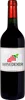
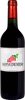
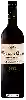
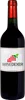
Winery RoquebrunÉclats de Schistes Saint-Chinian-Roquebrun
 Red wine



This wine is a blend of 5 varietals which are the Cabernet franc, the Cabernet-Sauvignon, the Malbec, the Petit Verdot and the Merlot.
In the mouth this red wine is a powerful with a nice balance between acidity and tannins.
This wine generally goes well with beef, veal or pasta.

Taste structure of the Éclats de Schistes Saint-Chinian-Roquebrun from the Winery Roquebrun
Light | Bold | |
Smooth | Tannic | |
Dry | Sweet | |
Soft | Acidic |
In the mouth the Éclats de Schistes Saint-Chinian-Roquebrun of Winery Roquebrun in the region of Languedoc-Roussillon is a powerful with a nice balance between acidity and tannins.
Wine flavors and olphactive analysis


On the nose the Éclats de Schistes Saint-Chinian-Roquebrun of Winery Roquebrun in the region of Languedoc-Roussillon often reveals types of flavors of cherry, earth or red fruit.
Food and wine pairings with Éclats de Schistes Saint-Chinian-Roquebrun
Pairings that work perfectly with Éclats de Schistes Saint-Chinian-Roquebrun



Original food and wine pairings with Éclats de Schistes Saint-Chinian-Roquebrun
The Éclats de Schistes Saint-Chinian-Roquebrun of Winery Roquebrun matches generally quite well with dishes of beef, pasta or veal such as recipes of polish goulash, farfalle with gorgonzola or filet mignon with prunes and white wine.
Details and technical informations about Winery Roquebrun's Éclats de Schistes Saint-Chinian-Roquebrun.
Discover the grape variety: Cabernet franc
Supple, fragrant reds with fine tannins and vibrant freshness, showing raspberry, violet, green pepper, pencil lead and gentle spice aromas. Star of the Loire as a single variety (Chinon, Bourgueil, Saumur-Champigny) and of the right bank of Bordeaux in blends (Cheval Blanc at 60%). Also in semi-dry Anjou rosés. A historic Bordeaux variety, parent of Cabernet-Sauvignon, Merlot and Carmenère.
Last vintages of this wine
The best vintages of Éclats de Schistes Saint-Chinian-Roquebrun from Winery Roquebrun are 2011, 2013, 2016, 2015 and 2012.
Informations about the Winery Roquebrun
The Winery Roquebrun is one of of the world's great estates. It offers 82 wines for sale in the of Saint-Chinian Roquebrun to come and discover on site or to buy online.

The wine region of Saint-Chinian Roquebrun
Communal AOC within Saint-Chinian on 5 Hérault communes (~250 ha across Berlou, Cessenon, Prades, Roquebrun and Vieussan, schist-dominant north, 150–400 m south-facing, sunny Mediterranean microclimate, green harvest in July, ≤40 hl/ha). Grenache Noir and Syrah as the flagship reds — supple, fruity, generous with a distinctive schist minerality. Carignan Noir and Mourvèdre as accessory complements. A recognisable identity.
The wine region of Languedoc-Roussillon
Largest single French vineyard, dominated by sunny, generous reds. Spicy Syrah, candied Grenache (ripe fruit, garrigue), structured Carignan, deep Mourvèdre, supple Cinsault. Stars: structured Corbières, Minervois, Faugères, Saint-Chinian; round Côtes-du-Roussillon. Legendary vins doux naturels: Banyuls and Maury (fortified Grenache) with notes of cocoa, fig, prune.
The word of the wine: Tears
Traces left by the wine on the sides of the glass when it is shaken or tilted.