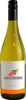
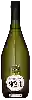
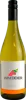
Winery Ronco MargheritaSauvignon
 White wine
In the mouth this white wine is a powerful.
This wine generally goes well with lean fish, shellfish or mature and hard cheese.
Taste structure of the Sauvignon from the Winery Ronco Margherita
Light | Bold | |
Dry | Sweet | |
Soft | Acidic |
In the mouth the Sauvignon of Winery Ronco Margherita in the region of Friuli-Venezia Giulia is a powerful.
Food and wine pairings with Sauvignon
Pairings that work perfectly with Sauvignon



Original food and wine pairings with Sauvignon


The Sauvignon of Winery Ronco Margherita matches generally quite well with dishes of pasta, shellfish or mature and hard cheese such as recipes of italian pasta, quick paella or melt-in-the-mouth omelette with tomatoes, asparagus and comté.
Details and technical informations about Winery Ronco Margherita's Sauvignon.
Discover the grape variety: Reichensteiner
Intraspecific crossing between the müller-thurgau and a variety resulting from the crossing (madeleine angevine x calabre blanc) obtained in Germany in 1939 by Heinrich Birk (1898-1973). It can be found in France (Alsace, etc.), Great Britain, the Netherlands, Germany, Belgium, Switzerland, New Zealand, etc.
Informations about the Winery Ronco Margherita
The Winery Ronco Margherita is one of of the world's great estates. It offers 34 wines for sale in the of Friuli-Venezia Giulia to come and discover on site or to buy online.

The wine region of Friuli-Venezia Giulia
Friuli-Venezia Giulia is an autonomous region in Italy, located in the extreme Northeast of the country, bordered by Austria and Slovenia to the north and east respectively. The eponymous wine region has four DOCGs, twelve DOCs and three PGIs and is best known for its white wine production. 77% of the region's wines are white, one of the highest proportions of any Italian region. The region's wines are distinctly different from other Italian wines in that they are made from non-traditional Grape varieties such as Sauvignon blanc, Riesling and Pinot blanc, as well as typically Italian varieties such as pinot gris and picolit.
The word of the wine: Presses
The juice that results from pressing the grapes after fermentation. At the end of the maceration, the vats are emptied, the first juice obtained is called the free-run wine and the marc remaining at the bottom of the vat is then pressed to give the press wine. We say more quickly "the presses". Their quality varies according to the vintage and the maceration. A too vigorous extraction releases the tannins of pips and the wine of press can then prove to be very astringent. Often the winemaker raises it separately, deciding later whether or not to incorporate it totally or partially into the grand vin.