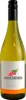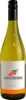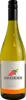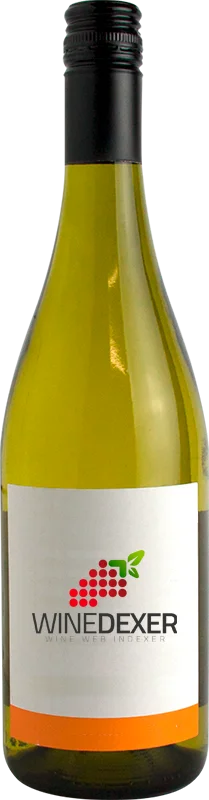
Winery Rodinné Vinařství SedlákSauvignon Pozdní Sběr
 Sweet wine



This wine generally goes well with vegetarian, rich fish (salmon, tuna etc) or shellfish.

Food and wine pairings with Sauvignon Pozdní Sběr
Pairings that work perfectly with Sauvignon Pozdní Sběr



Original food and wine pairings with Sauvignon Pozdní Sběr
The Sauvignon Pozdní Sběr of Winery Rodinné Vinařství Sedlák matches generally quite well with dishes of rich fish (salmon, tuna etc), shellfish or vegetarian such as recipes of marmite dieppoise, norman mussels with cider or quiche with bacon and gruyère cheese.
Details and technical informations about Winery Rodinné Vinařství Sedlák's Sauvignon Pozdní Sběr.
Discover the grape variety: Arinarnoa
Colourful, structured reds with a dark ruby hue, firm tannins and a dense palate, with aromas of black fruits (blackcurrant, blackberry), cherry, plum, spices, black pepper and balsamic notes reminiscent of cabernet sauvignon. Fine ageing potential. Grown in Languedoc-Roussillon and the South-West for IGP wines, also adopted in Argentina and Uruguay for modern reds. French hybrid created in 1956 in Bordeaux by INRA (tannat × cabernet sauvignon).
Last vintages of this wine
The best vintages of Sauvignon Pozdní Sběr from Winery Rodinné Vinařství Sedlák are 2016, 0, 2013
Informations about the Winery Rodinné Vinařství Sedlák
The Winery Rodinné Vinařství Sedlák is one of of the world's great estates. It offers 40 wines for sale in the of Morava to come and discover on site or to buy online.

The wine region of Morava
Predominantly white region, lively and mineral: crisp, peppery Grüner Veltliner, taut Riesling with citrus, supple, floral Müller-Thurgau, aromatic Pálava, the local signature (muscat, white flowers). More discreet reds: spicy Frankovka (Blaufränkisch) with black fruits, fine, silky Saint Laurent. Temperate continental climate, 4 sub-regions: Mikulov, Velké Pavlovice, Znojmo, Slovácko. ~96% of the Czech vineyard, 73 grapes grown.
The word of the wine: Aroma
A pleasant smell that can be primary (or varietal, i.e. characteristic of the grape), secondary (resulting from fermentation) or tertiary (resulting from the aging of the wine in the bottle).