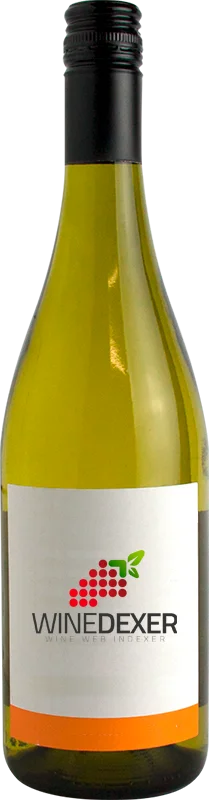
Winery RiosecoSauvignon Blanc
 White wine


In the mouth this white wine is a with a nice freshness.
This wine generally goes well with vegetarian, shellfish or goat cheese.
Taste structure of the Sauvignon Blanc from the Winery Rioseco
Light | Bold | |
Dry | Sweet | |
Soft | Acidic |
In the mouth the Sauvignon Blanc of Winery Rioseco in the region of Castille-et-Léon is a with a nice freshness.
Food and wine pairings with Sauvignon Blanc
Pairings that work perfectly with Sauvignon Blanc


Original food and wine pairings with Sauvignon Blanc
The Sauvignon Blanc of Winery Rioseco matches generally quite well with dishes of shellfish, vegetarian or goat cheese such as recipes of scallops on a bed of leeks, goat cheese and bacon quiche or puff pastry with ratatouille and goat cheese.
Details and technical informations about Winery Rioseco's Sauvignon Blanc.
Discover the grape variety: Colobel
Colobel noir is a grape variety that originated in France. It is a variety resulting from a cross of the same species (interspecific hybridization). It produces a variety of grape specially used for wine making. It is rare to find this grape for eating on our tables. The Colobel noir can be found in the vineyards of the Rhône Valley.
Last vintages of this wine
The best vintages of Sauvignon Blanc from Winery Rioseco are 2020, 0
Informations about the Winery Rioseco
The Winery Rioseco is one of of the world's greatest estates. It offers 3 wines for sale in the of Rueda to come and discover on site or to buy online.

The wine region of Rueda
The wine region of Rueda is located in the region of Castille-et-Léon of Spain. Wineries and vineyards like the Domaine Belondrade or the Domaine Ordóñez produce mainly wines white, sweet and red. The most planted grape varieties in the region of Rueda are Verdejo, Tempranillo and Albarino, they are then used in wines in blends or as a single variety. On the nose of Rueda often reveals types of flavors of grapefruit, balsamic or sage and sometimes also flavors of chalk, mint or tomatoes.
The wine region of Castille-et-Léon
Located in the northern half of the Central Iberian plateau, Castilla y León is the largest of Spain's 17 administrative regions, covering about one-fifth of the country's total area. It extends about 350 kilometres (220 miles) from central Spain to the northern coast. Just as wide, it connects the Rioja wine region to the Portuguese border. Red wines reign supreme in Castilla y León, and the Tempranillo grape is undoubtedly the king.
The word of the wine: R-M (champagne)
Harvesting and handling. It is the artisan winemaker. He elaborates his own champagne, often a monocru representative of the village or the surrounding villages.