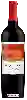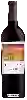
Winery Red SolesGarnacha
 Red wine



This wine generally goes well with pork, beef or lamb.
Food and wine pairings with Garnacha
Pairings that work perfectly with Garnacha



Original food and wine pairings with Garnacha

The Garnacha of Winery Red Soles matches generally quite well with dishes of beef, lamb or pork such as recipes of autumn beef bourguignon, baekenofe (alsatian meat stew) or wild boar stew.
Details and technical informations about Winery Red Soles's Garnacha.
Discover the grape variety: Cabernet-Dorsa
Intraspecific cross between the limberger and the dornfelder made in 1971 by Bernard Hill of the Weinsberg Research Institute in Germany. It can be found in the Netherlands, Germany, Belgium, Switzerland, Poland, the Czech Republic and the United States. Note that Cabernet Dorio has the same parents.
Last vintages of this wine
The best vintages of Garnacha from Winery Red Soles are 0
Informations about the Winery Red Soles
The Winery Red Soles is one of of the world's greatest estates. It offers 26 wines for sale in the of Paso Robles to come and discover on site or to buy online.

The wine region of Paso Robles
The wine region of Paso Robles is located in the region of San Luis Obispo County of California of United States. We currently count 940 estates and châteaux in the of Paso Robles, producing 3510 different wines in conventional, organic and biodynamic agriculture. The wines of Paso Robles go well with generally quite well with dishes .
The wine region of California
California is the largest and most important wine region in the United States. It represents the southern two-thirds (850 miles or 1,370 kilometers) of the country's west coast. (Oregon and Washington make up the rest. ) The state also spans nearly 10 degrees of latitude.
The word of the wine: White winemaking
White wines are obtained by fermentation of the juice after pressing. A pre-fermentation maceration is sometimes practiced to extract the aromatic substances from the skins. White wines are normally made from white grapes, but can also be made from red grapes (blanc de noirs). The grapes are then pressed as soon as they arrive at the vat house without maceration in order to prevent the colouring matter contained in the skins from "staining" the wine.