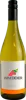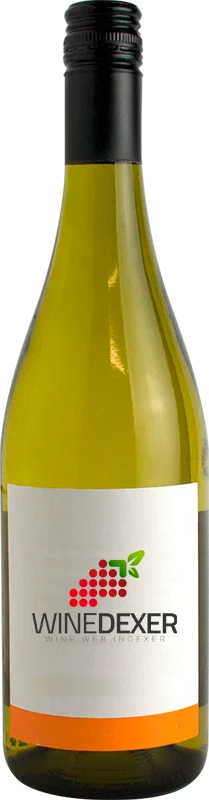
Domaine RayLa Chopine Saint-Pourçain Blanc
 White wine
This wine generally goes well with
The La Chopine Saint-Pourçain Blanc of the Domaine Ray is in the top 80 of wines of Saint-Pourçain.
Details and technical informations about Domaine Ray's La Chopine Saint-Pourçain Blanc.
Discover the grape variety: Loin de l'oeil
This variety is most certainly from the Tarn region, more precisely from Gaillac, and is registered in the Official Catalogue of wine grape varieties, list A1. It is not found in any other French wine-growing region and is virtually unknown abroad.
Informations about the Domaine Ray
The Domaine Ray is one of of the world's great estates. It offers 18 wines for sale in the of Saint-Pourçain to come and discover on site or to buy online.

The wine region of Saint-Pourçain
The AOC Saint-Pourçain beLongs to the Centre-Loire sub-region, and applies to wines from the AuvergneVineyards. The annual production is 25,500 hl/year. In the heart of the crystalline Massif Central, the vineyard extends over 540 hectares and 19 communes (including Saint-Pourçain) on the left bank of the Allier. The soils of Saint-Pourçain are composed of tertiary sediments, topped by granitic bands and then by clays and limestones.
The wine region of Loire Valley
The Loire Valley is a key wine region in western France. It follows the course of the Loire River on its Long journey through the heart of France, from the inland hills of the Auvergne to the plains of the French Atlantic coast near Nantes (Muscadet country). Important in terms of quantity and quality, the region produces large quantities (about 4 million h/l each year) of everyday wines, as well as some of France's greatest wines. Diversity is another of the region's major assets; the styles of wine produced here range from the light, tangy Muscadet to the Sweet, honeyed Bonnezeaux, the Sparkling whites of Vouvray and the juicy, Tannic reds of Chinon and Saumur.
The word of the wine: Viscosity
Consistency of wine reminiscent of the tactile sensation of sugar syrup with varying degrees of fluidity, due to the alcohol and natural sugar in the grapes present in sweet wines. In excess, this sensation can make the wine pasty and heavy. To the eye, viscosity is referred to as tears.