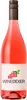
Winery Quinta do CarneiroPactus Alicante Bouschet
 Red wine


In the mouth this red wine is a powerful with a nice freshness.
This wine generally goes well with poultry, beef or veal.
Taste structure of the Pactus Alicante Bouschet from the Winery Quinta do Carneiro
Light | Bold | |
Smooth | Tannic | |
Dry | Sweet | |
Soft | Acidic |
In the mouth the Pactus Alicante Bouschet of Winery Quinta do Carneiro in the region of Lisboa is a powerful with a nice freshness.
Wine flavors and olphactive analysis


On the nose the Pactus Alicante Bouschet of Winery Quinta do Carneiro in the region of Lisboa often reveals types of flavors of red fruit, black fruit.
Food and wine pairings with Pactus Alicante Bouschet
Pairings that work perfectly with Pactus Alicante Bouschet



Original food and wine pairings with Pactus Alicante Bouschet

The Pactus Alicante Bouschet of Winery Quinta do Carneiro matches generally quite well with dishes of beef, pasta or veal such as recipes of beef miroton, cannelloni with brocciu from jeanne or veal chop normandy style.
Details and technical informations about Winery Quinta do Carneiro's Pactus Alicante Bouschet.
Discover the grape variety: Mondeuse noire
Cultivated for a very long time in Savoie, it is not the black form of mondeuse blanche and Mondeuse grise is a natural mutation of mondeuse noire. According to Thierry Lacombe (I.N.R.A./Montpellier), the latter is the result of a natural intraspecific crossing between the black tressot and the white mondeuse. Mondeuse grise and Mondeuse noire are both registered in the official catalogue of wine grape varieties, list A1.
Last vintages of this wine
The best vintages of Pactus Alicante Bouschet from Winery Quinta do Carneiro are 2007, 0
Informations about the Winery Quinta do Carneiro
The Winery Quinta do Carneiro is one of of the world's greatest estates. It offers 20 wines for sale in the of Lisboa to come and discover on site or to buy online.

The wine region of Lisboa
Lisboa (formerly Estremadura) is a prolific wine region located at the Center of Portugal's Atlantic coast. Despite being one of the country's most productive winemaking areas, its name remains relatively obscure in wine terms, as its wines have traditionally been labeled with the names of the local sub-regions, which include Alenquer, Bucelas and Colares. The region is also home to Portugal's capital, Lisbon. The region fell under the VR (Vinho Regional) classification until 2008, when the category was renamed IGP (Indicaciones Geográficas Protegidas) to bring it into line with the rest of Europe.
The word of the wine: Oenologist
Specialist in wine-making techniques. It is a profession and not a passion: one can be an oenophile without being an oenologist (and the opposite too!). Formerly attached to the Faculty of Pharmacy, oenology studies have become independent and have their own university course. Learning to make wine requires a good chemical background but also, increasingly, a good knowledge of the plant. Some oenologists work in laboratories (analysis). Others, the consulting oenologists, work directly in the properties.