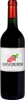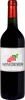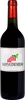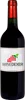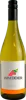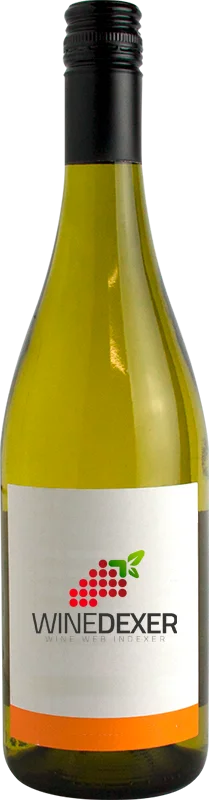
Winery PurisimaClassic Sauvignon Blanc
 White wine


In the mouth this white wine is a with a nice freshness.
This wine generally goes well with vegetarian, shellfish or goat cheese.
Taste structure of the Classic Sauvignon Blanc from the Winery Purisima
Light | Bold | |
Dry | Sweet | |
Soft | Acidic |
In the mouth the Classic Sauvignon Blanc of Winery Purisima in the region of Central Valley is a with a nice freshness.
Food and wine pairings with Classic Sauvignon Blanc
Pairings that work perfectly with Classic Sauvignon Blanc


Original food and wine pairings with Classic Sauvignon Blanc
The Classic Sauvignon Blanc of Winery Purisima matches generally quite well with dishes of shellfish, vegetarian or goat cheese such as recipes of mouclade, magic cake cheese quiche or goat cheese and caramelized leek muffins.
Details and technical informations about Winery Purisima's Classic Sauvignon Blanc.
Discover the grape variety: Couderc 4401
An interspecific cross made in 1884 by Georges Couderc (1850-1928) between chasselas rose and rupestris. This direct-producing hybrid was multiplied much more in the south-west of France and in the Loire Valley, and in some cases was even used as rootstock. François Baco (1865-1947) and Vincent Malègue (1830-1915) also used it as a progenitor. - Synonymy: red bird, tank, Terray hybrid, malafosse, oazo rukh, sakhotin (for all the grape variety synonyms, click here!). - Description: small to medium-sized bunches, cylindrical-conical, winged, more or less compact, sometimes with small green berries, medium-sized stalks remaining green when ripe; small, spherical berries, beautiful bluish-black skin, very pruinose, pulpy, with coloured juice.
Last vintages of this wine
The best vintages of Classic Sauvignon Blanc from Winery Purisima are 0
Informations about the Winery Purisima
The Winery Purisima is one of of the world's greatest estates. It offers 6 wines for sale in the of Maule Valley to come and discover on site or to buy online.

The wine region of Maule Valley
Maule Valley is the largest wine-producing region in Chile other than the Central Valley, of which it is a Part. It has 75,000 acres (30,000ha) under Vine, and has traditionally been associated with quantity rather than quality. But this is rapidly changing – the bulk-producing Pais vine is gradually being replaced with more international varieties such as Cabernet Sauvignon and Carmenère, and careful winemaking practices are being employed to make some world-class red wines from old-vine Carignan. The Central Valley itself runs between the Andes and the Coastal Mountains from the Chilean capital of Santiago in the North to the up-and-coming region of Bío Bío in the South.
The wine region of Central Valley
The Central Valley (El Valle Central) of Chile is one of the most important wine-producing areas in South America in terms of Volume. It is also one of the largest wine regions, stretching from the Maipo Valley (just south of Santiago) to the southern end of the Maule Valley. This is a distance of almost 250 miles (400km) and covers a number of Climate types. The Central Valley wine region is easily (and often) confused with the geological Central Valley, which runs north–south for more than 620 miles (1000km) between the Pacific Coastal Ranges and the lower Andes.
The word of the wine: Grafting
A method used since the phylloxera crisis, consisting of fixing a graft of local origin on a rootstock resistant to phylloxera.