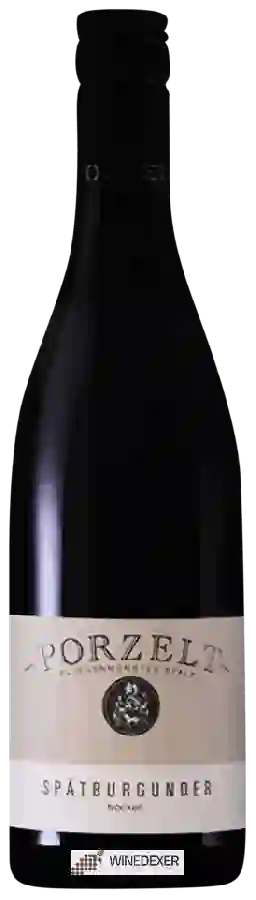
Winery PorzeltSpätburgunder Trocken
 Red wine



In the mouth this red wine is a with a nice freshness.
This wine generally goes well with poultry, beef or veal.

Taste structure of the Spätburgunder Trocken from the Winery Porzelt
Light | Bold | |
Smooth | Tannic | |
Dry | Sweet | |
Soft | Acidic |
In the mouth the Spätburgunder Trocken of Winery Porzelt in the region of Pfalz is a with a nice freshness.
Food and wine pairings with Spätburgunder Trocken
Pairings that work perfectly with Spätburgunder Trocken



Original food and wine pairings with Spätburgunder Trocken

The Spätburgunder Trocken of Winery Porzelt matches generally quite well with dishes of beef, veal or game (deer, venison) such as recipes of monkfish armorican style, breaded veal cutlets or rabbit with cider and mushrooms.
Details and technical informations about Winery Porzelt's Spätburgunder Trocken.
Discover the grape variety: Ravat 34
Simple, dry and fresh whites with a pale golden robe, supple palate and moderate acidity; undemanding aromas of citrus and white flowers. Productive and disease-resistant. Grown in small quantities in France and Canada (Quebec) for vineyards with harsh continental climates. French white hybrid bred by Jean-François Ravat in the early 20th century, part of the historic post-phylloxera French hybridisations.
Last vintages of this wine
The best vintages of Spätburgunder Trocken from Winery Porzelt are 0, 2012
Informations about the Winery Porzelt
The Winery Porzelt is one of of the world's great estates. It offers 54 wines for sale in the of Pfalz to come and discover on site or to buy online.

The wine region of Pfalz
Fleshy, dry, fruity Riesling is the region's signature: yellow peach, apricot, ripe citrus, lovely mineral tension. Germany's largest red-wine area (40%), with silky Spätburgunder showing red fruit and spice, darker structured Dornfelder, supple Portugieser. Some rounded Pinot Blanc and Pinot Gris. A 23,640 ha vineyard along the Haardt, among Germany's warmest (>2,000 h of sun).
The word of the wine: Over-ripeness
Characteristic of grapes harvested late, rich in sugar, which give wines often mellow and marked by candied aromas.