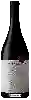
The Winery Poonawatta of Barossa of Australie du Sud
The Winery Poonawatta is one of the best wineries to follow in Barossa.. It offers 19 wines for sale in of Barossa to come and discover on site or to buy online.
Looking for the best Winery Poonawatta wines in Barossa among all the wines in the region? Check out our tops of the best red, white or effervescent Winery Poonawatta wines. Also find some food and wine pairings that may be suitable with the wines from this area. Learn more about the region and the Winery Poonawatta wines with technical and enological descriptions.
How Winery Poonawatta wines pair with each other generally quite well with dishes of beef, lamb or game (deer, venison) such as recipes of pot roast, royal couscous (lamb, chicken, merguez) or rabbit with onions and mustard.
On the nose the red wine of Winery Poonawatta. often reveals types of flavors of non oak, earth or oak and sometimes also flavors of spices, red fruit or black fruit. In the mouth the red wine of Winery Poonawatta. is a powerful with a nice balance between acidity and tannins.
Barossa is one of the six wine-producing zones of SouthAustralia, and arguably the most recognized name in the Australian wine industry. Barossa wines have attracted more international awards than any other region in the country.
It is divided into two sections: the western Barossa Valley (effectively the Warmer valley floor) and on the eastern side the cooler, higher altitude Eden Valley, both of which have a distinct Geographical Indication (GI) formalized in 1997. Grapegrowing conditions vary immensely across the wider Barossa zone and this is reflected in the markedly different wine styles produced here.
Shiraz accounted for 56 percent of all plantings in the Barossa zone in 2017, focused on the Barossa Valley floor. Barossa Shiraz has traditionally been made in an intense, Powerful, expression, and is arguably Australia's most famous wine style. Riesling is particularly prominent in the Eden Valley, and can also reach quality levels comparable to any other global region.
Other very high quality Barossa wines are produced from Cabernet Sauvignon, Merlot, Chardonnay, Semillon and Viognier.
Additionally, GSM-style blends have earned high acclaim, as Grenache and Mourvedre (also known as Mataro in the region) perform extremely well in Barossa's warm and DryClimate. Recently the zone has also been a hotbed of experimentation, with NewVine varieties such as Tempranillo and Zinfandel making their mark on local and international markets.
The Barossa zone lies northeast of Adelaide Hills and is a compact geographical unit with a variable landscape of gently elevated terrain and flat valley floors. The overall climate is hard to categorize as conditions vary – not only due to the elevation but also because of the inland locations and the coastal influence.
How Winery Poonawatta wines pair with each other generally quite well with dishes of pork, shellfish or poultry such as recipes of stuffed mushrooms, mussels with chicken or eggs florentine.
On the nose the white wine of Winery Poonawatta. often reveals types of flavors of earth, microbio or vegetal and sometimes also flavors of tree fruit, citrus fruit or floral. In the mouth the white wine of Winery Poonawatta. is a with a nice freshness.
White Riesling is a grape variety that originated in France (Alsace). It produces a variety of grape specially used for the elaboration of wine. It is rare to find this grape to eat on our tables. This variety of grape is characterized by small bunches, and small grapes. White Riesling can be found in many vineyards: Alsace, Loire Valley, Languedoc & Roussillon, Lorraine, Provence & Corsica, Rhone Valley, Savoie & Bugey, Beaujolais, South West.
Planning a wine route in the of Barossa? Here are the wineries to visit and the winemakers to meet during your trip in search of wines similar to Winery Poonawatta.
A direct producer hybrid obtained by Georges Couderc by crossing Vitis Lincecumii (Buckley) with 162-5 Couderc, the latter having 3/4 blood of Vinifera-Rupestris. Today, like most hybrids, it has practically disappeared. It can still be found in a mixture in very old vineyards, the photographs below were taken in the Ardèche, on the border with the Gard, north of Saint Ambroix.