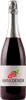
Winery PolvaneraLa Marchesana Falanghina
 White wine


In the mouth this white wine is a powerful.
This wine generally goes well with vegetarian, appetizers and snacks or shellfish.
Taste structure of the La Marchesana Falanghina from the Winery Polvanera
Light | Bold | |
Dry | Sweet | |
Soft | Acidic |
In the mouth the La Marchesana Falanghina of Winery Polvanera in the region of Puglia is a powerful.
Food and wine pairings with La Marchesana Falanghina
Pairings that work perfectly with La Marchesana Falanghina



Original food and wine pairings with La Marchesana Falanghina
The La Marchesana Falanghina of Winery Polvanera matches generally quite well with dishes of shellfish, vegetarian or appetizers and snacks such as recipes of arroz de marisco, mushroom, bacon and gruyere quiche or salted muffins with bacon and grated cheese.
Details and technical informations about Winery Polvanera's La Marchesana Falanghina.
Discover the grape variety: Pé de perdrix
This grape variety would be of Spanish origin, it was in this country mainly used as table grape. The Pé de perdrix has now completely disappeared. It should not be confused with the pied de perdrix, which is the red-tailed côt with black grapes.
Last vintages of this wine

The best vintages of La Marchesana Falanghina from Winery Polvanera are 2014, 2015, 0, 2016
Informations about the Winery Polvanera
The Winery Polvanera is one of of the world's great estates. It offers 58 wines for sale in the of Puglia to come and discover on site or to buy online.

The wine region of Puglia
Puglia (Apulia to many English speakers) is a Long, slender wine region in the extreme Southeast corner of Italy's "boot". To use the shoe analogy often used to illustrate the shape of Italy, Apulia extends from the tip of the heel to the mid-calf, where the spur of the Gargano Peninsula juts out into the Adriatic Sea. The heel (the Salento peninsula) occupies the southern half of the region and is of great importance for the identity of Puglia. Not only are there cultural and geographical differences from Northern Puglia, but the wines are also different.
The word of the wine: Phenolic ripeness
A distinction is made between the ripeness of sugars and acids and the ripeness of tannins and other compounds such as anthocyanins and tannins, which will bring structure and colour. Grapes can be measured at 13° potential without having reached this phenolic maturity. Vinified at this stage, they will give hard, astringent wines, without charm.