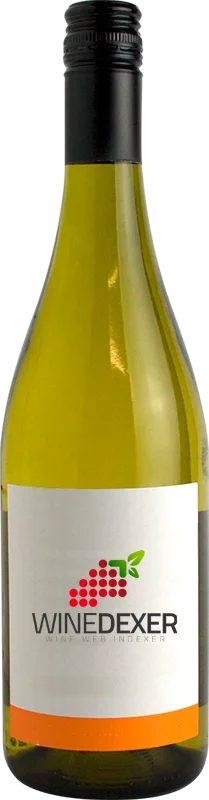
Winery Peter VellaDelicious White
 White wine


In the mouth this white wine is a powerful.
This wine generally goes well with pork, poultry or shellfish.
Taste structure of the Delicious White from the Winery Peter Vella
Light | Bold | |
Dry | Sweet | |
Soft | Acidic |
In the mouth the Delicious White of Winery Peter Vella in the region of California is a powerful.
Food and wine pairings with Delicious White
Pairings that work perfectly with Delicious White



Original food and wine pairings with Delicious White

The Delicious White of Winery Peter Vella matches generally quite well with dishes of pasta, pork or shellfish such as recipes of awara broth, quiche with bacon and gruyère cheese or rice with seafood.
Details and technical informations about Winery Peter Vella's Delicious White.
Discover the grape variety: Ohanès
This variety is known in Spain, Portugal, Italy, Greece, Morocco, South Africa, the United States (California), Argentina, Chile, etc. In France, it is little cultivated because of its late maturity. - Synonyms: oanez or ohanez, uva de Almeria, uva del barco, santa paula, not to be confused with the white gherkin, khaen, grumer negro, valenci or valensi, which is not related to the black valensi (for all the synonyms of the grape varieties, click here!)
Last vintages of this wine
The best vintages of Delicious White from Winery Peter Vella are 0
Informations about the Winery Peter Vella
The Winery Peter Vella is one of of the world's greatest estates. It offers 18 wines for sale in the of California to come and discover on site or to buy online.

The wine region of California
California is the largest and most important wine region in the United States. It represents the southern two-thirds (850 miles or 1,370 kilometers) of the country's west coast. (Oregon and Washington make up the rest. ) The state also spans nearly 10 degrees of latitude.
The word of the wine: Effervescent
Any wine loaded with CO2 (carbon dioxide), which is revealed in the form of bubbles, reinforcing the freshness effect in the mouth. This gas production is the result of what is called the second fermentation in the bottle. It occurs in champagnes and sparkling wines such as crémants.