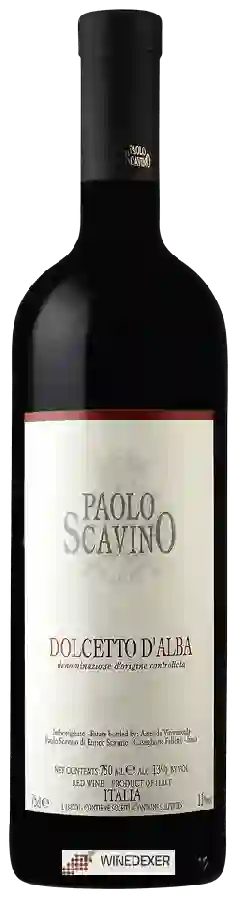
Winery Paolo ScavinoDolcetto D'Alba
 Red wine



In the mouth this red wine is a powerful with a lot of tannins present in the mouth.
This wine generally goes well with beef, game (deer, venison) or lamb.

Taste structure of the Dolcetto D'Alba from the Winery Paolo Scavino
Light | Bold | |
Smooth | Tannic | |
Dry | Sweet | |
Soft | Acidic |
In the mouth the Dolcetto D'Alba of Winery Paolo Scavino in the region of Piedmont is a powerful with a lot of tannins present in the mouth.
Wine flavors and olphactive analysis






On the nose the Dolcetto D'Alba of Winery Paolo Scavino in the region of Piedmont often reveals types of flavors of non oak, earth or microbio and sometimes also flavors of vegetal, oak or spices.
Food and wine pairings with Dolcetto D'Alba
Pairings that work perfectly with Dolcetto D'Alba



Original food and wine pairings with Dolcetto D'Alba

The Dolcetto D'Alba of Winery Paolo Scavino matches generally quite well with dishes of beef, pasta or lamb such as recipes of sloth pork loin, spaghetti with beef balls or daniel's algerian couscous.
Details and technical informations about Winery Paolo Scavino's Dolcetto D'Alba.
Discover the grape variety: Periquita
Supple, fruity reds with an intense ruby color, smooth tannins and a generous palate, offering signature aromas of red fruits (raspberry, strawberry, blackberry), plum, cherry, soft spices and Mediterranean herbaceous notes. An accessible, sunny profile. Essential component of Setúbal Peninsula DOC (where it bears this name), Palmela DOC, Alentejo DOC and Tejo DOC reds. Portuguese synonym for castelão, one of Portugal's most planted indigenous varieties.
Last vintages of this wine
The best vintages of Dolcetto D'Alba from Winery Paolo Scavino are 2017, 2019, 2008, 2018 and 2016.
Informations about the Winery Paolo Scavino
The Winery Paolo Scavino is one of of the world's great estates. It offers 22 wines for sale in the of Piedmont to come and discover on site or to buy online.

The wine region of Piedmont
Kingdom of Nebbiolo: Barolo and Barbaresco DOCG, long-ageing reds with firm tannins and lively acidity, complex aromas of withered rose, sour cherry, tar, truffle and undergrowth. More accessible, tangy Barbera on red fruit, supple, crisp Dolcetto. Sweet, floral sparkling Moscato d'Asti, mineral, lemony Gavi (Cortese) white, round, almondy Arneis from Roero. 50,000 ha across the Langhe, Roero and Monferrato, UNESCO.
The word of the wine: Marcottage
A vine reproduction technique that consists of burying a vine shoot that takes root and reproduces a plant with the same characteristics as the vine to which it is attached (synonym: provignage).