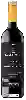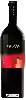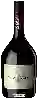
Winery Pagos del ReyMuseo Del Vino
 Red wine


In the mouth this red wine is a powerful with a lot of tannins present in the mouth.
This wine generally goes well with beef, game (deer, venison) or lamb.
Taste structure of the Museo Del Vino from the Winery Pagos del Rey
Light | Bold | |
Smooth | Tannic | |
Dry | Sweet | |
Soft | Acidic |
In the mouth the Museo Del Vino of Winery Pagos del Rey in the region of Castille-et-Léon is a powerful with a lot of tannins present in the mouth.
Food and wine pairings with Museo Del Vino
Pairings that work perfectly with Museo Del Vino



Original food and wine pairings with Museo Del Vino
The Museo Del Vino of Winery Pagos del Rey matches generally quite well with dishes of beef, lamb or game (deer, venison) such as recipes of bernard's potée, oven-baked lamb stew or oven roasted rabbit with mustard.
Details and technical informations about Winery Pagos del Rey's Museo Del Vino.
Discover the grape variety: Merlot khorus
An interspecific cross between Merlot noir and Kozma 20-3 (also the same parents of Merlot Khantus) obtained in 2002 by Simone Diego Castellarin and Guido Cipriani at the Institute of Applied Genomics in Udine, Italy. Merlot khorus is particularly resistant to mildew and tolerant to powdery mildew. Known in Italy ... almost unknown in France, not registered in the Official Catalogue of wine grape varieties.
Last vintages of this wine
The best vintages of Museo Del Vino from Winery Pagos del Rey are 0
Informations about the Winery Pagos del Rey
The Winery Pagos del Rey is one of of the world's great estates. It offers 114 wines for sale in the of Toro to come and discover on site or to buy online.

The wine region of Toro
The wine region of Toro is located in the region of Castille-et-Léon of Spain. Wineries and vineyards like the Domaine Teso La Monja or the Domaine Teso La Monja produce mainly wines red, white and sweet. The most planted grape varieties in the region of Toro are Tempranillo, Verdejo and Pinot gris, they are then used in wines in blends or as a single variety. On the nose of Toro often reveals types of flavors of cherry, espresso or black olive and sometimes also flavors of menthol, bramble or cigar box.
The wine region of Castille-et-Léon
Located in the northern half of the Central Iberian plateau, Castilla y León is the largest of Spain's 17 administrative regions, covering about one-fifth of the country's total area. It extends about 350 kilometres (220 miles) from central Spain to the northern coast. Just as wide, it connects the Rioja wine region to the Portuguese border. Red wines reign supreme in Castilla y León, and the Tempranillo grape is undoubtedly the king.
The word of the wine: Ampélographie
Study of the vine, and more particularly the grape varieties.