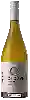
Winery ObserverObserver Darwin Series Grand Reserve Chardonnay
 White wine



In the mouth this white wine is a powerful.
This wine generally goes well with pork, vegetarian or poultry.

Taste structure of the Observer Darwin Series Grand Reserve Chardonnay from the Winery Observer
Light | Bold | |
Dry | Sweet | |
Soft | Acidic |
In the mouth the Observer Darwin Series Grand Reserve Chardonnay of Winery Observer in the region of Central Valley is a powerful.
Food and wine pairings with Observer Darwin Series Grand Reserve Chardonnay
Pairings that work perfectly with Observer Darwin Series Grand Reserve Chardonnay



Original food and wine pairings with Observer Darwin Series Grand Reserve Chardonnay

The Observer Darwin Series Grand Reserve Chardonnay of Winery Observer matches generally quite well with dishes of pork, rich fish (salmon, tuna etc) or vegetarian such as recipes of savoyard crozet gratin, sun burger or magic cake cheese quiche.
Details and technical informations about Winery Observer's Observer Darwin Series Grand Reserve Chardonnay.
Discover the grape variety: Chardonnay
Whites with many faces: mineral and taut at Chablis (lemon, green apple, flint), opulent and buttery at Meursault and Puligny-Montrachet (hazelnut, brioche, yellow fruits), tense and chalky in Champagne (Blanc de Blancs). Also vinified sparkling and widely exported (Sonoma, Margaret River, Casablanca). A Burgundian variety, a cross of Pinot Noir × Gouais Blanc, half-sibling of Aligoté.
Last vintages of this wine
The best vintages of Observer Darwin Series Grand Reserve Chardonnay from Winery Observer are 2016, 0, 2017
Informations about the Winery Observer
The Winery Observer is one of of the world's great estates. It offers 21 wines for sale in the of Maule Valley to come and discover on site or to buy online.

The wine region of Maule Valley
Historic cradle of Chilean viticulture (16th century). Quality revival around old-vine Carignan (70+ years): dense, deep reds with notes of blackberry, candied plum, spices and fine tannins, a unique expression. Sturdy Cabernet Sauvignon, supple Carménère (ripe pepper, black fruits), juicy Côt (Malbec), round Merlot. Some sharp Sauvignon Blanc.
The wine region of Central Valley
Heart of modern Chilean wine: structured, sunny reds, dense, blackcurranty Cabernet Sauvignon from Maipo (Chilean cradle of the grape), signature Carménère with notes of ripe pepper, black fruit and sweet spices from Colchagua, supple Merlot and deep Syrah. Round Chardonnay whites and lively, sharp Sauvignon. Mediterranean climate, 400 km between Andes and Pacific. Star sub-regions: Maipo, Cachapoal, Colchagua, Curicó, Maule.
The word of the wine: Removal of shoes
In the spring, this operation consists of removing the mound of earth formed at the foot of the vines by ploughing between the rows in the autumn.