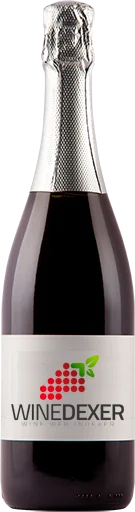
Winery Ned KellyHeavy Red Spritzer
 Sparkling wine


This wine generally goes well with
Details and technical informations about Winery Ned Kelly's Heavy Red Spritzer.
Discover the grape variety: Gros Colman
From the South Caucasus, perhaps in Georgia, some writings give it as coming from Russia, a country close to the previous one. For a long time, it was grown in greenhouses, particularly in Belgium, but also in England, France, Holland and Japan. It was rarely cultivated in the field, but a few attempts were made without much success on the banks of the Rhine, in the Tarn et Garonne region and in Thomery in the Seine et Marne region. Today, it is no longer multiplied in nurseries and is therefore in danger of extinction. It is thought to be the result of a natural intraspecific cross between white tigvoasa or furjmony feher - a Romanian variety with female flowers - and black kadarka. There is a clone that takes on a very characteristic purple color in the fall, with larger berries, larger bunches and later ripening.
Last vintages of this wine
The best vintages of Heavy Red Spritzer from Winery Ned Kelly are 0
Informations about the Winery Ned Kelly
The Winery Ned Kelly is one of of the world's greatest estates. It offers 2 wines for sale in the of Murray Darling to come and discover on site or to buy online.

The wine region of Murray Darling
The wine region of Murray Darling is located in the region of Big Rivers of Nouvelle-Galles du Sud of Australia. Wineries and vineyards like the Domaine McPherson or the Domaine McGuigan produce mainly wines red, white and sparkling. The most planted grape varieties in the region of Murray Darling are Cabernet-Sauvignon, Chardonnay and Merlot, they are then used in wines in blends or as a single variety. On the nose of Murray Darling often reveals types of flavors of citrus, fig or red cherry and sometimes also flavors of pepper, black fruits or black currant.
The wine region of Nouvelle-Galles du Sud
The NewSouthWales wine appellation is made up of 16 different regions and covers approximately 810,000 square kilometres (312,000 square miles). This is the Size of the state of New South Wales, one of the six that make up the federal Commonwealth of Australia. Although it is one of the smallest Australian states geographically, it has been the most populous since the first European settlements in the 18th century. The South East Australia GI area is the largest in Australia and can include any wine produced in New South Wales as well as Victoria, Tasmania and Parts of South Australia.
The word of the wine: Flint (smell of)
Mineral odour reminiscent of flint and flint heated during sharpening.