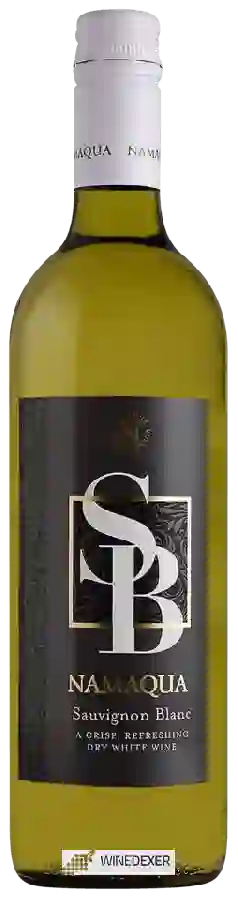
Winery NamaquaSauvignon Blanc
 White wine



In the mouth this white wine is a with a nice freshness.
This wine generally goes well with vegetarian, shellfish or goat cheese.

Taste structure of the Sauvignon Blanc from the Winery Namaqua
Light | Bold | |
Dry | Sweet | |
Soft | Acidic |
In the mouth the Sauvignon Blanc of Winery Namaqua in the region of Western Cape is a with a nice freshness.
Wine flavors and olphactive analysis


On the nose the Sauvignon Blanc of Winery Namaqua in the region of Western Cape often reveals types of flavors of vegetal, tree fruit.
Food and wine pairings with Sauvignon Blanc
Pairings that work perfectly with Sauvignon Blanc


Original food and wine pairings with Sauvignon Blanc
The Sauvignon Blanc of Winery Namaqua matches generally quite well with dishes of shellfish, vegetarian or goat cheese such as recipes of brasucade of mussels from languedoc, broccoli and blue cheese quiche without pastry or tagliatelle with pesto, goat cheese and bacon.
Details and technical informations about Winery Namaqua's Sauvignon Blanc.
Discover the grape variety: Mècle
Light, simple fruity reds with a pale, lightly coloured ruby robe, soft tannins and an airy palate with moderate acidity, with understated aromas of red fruits. Discreet rustic profile. Almost vanished from commercial cultivation, preserved in INRAE variety collections; bears witness to the pre-phylloxera ampelographic diversity of the southern French vineyards. Rare French black variety, once grown in the south-east.
Last vintages of this wine
The best vintages of Sauvignon Blanc from Winery Namaqua are 2013, 2018, 2016, 2010 and 2019.
Informations about the Winery Namaqua
The Winery Namaqua is one of of the world's greatest estates. It offers 33 wines for sale in the of Western Cape to come and discover on site or to buy online.

The wine region of Western Cape
Cradle of South African wine. Signature Chenin Blanc (Steen, 20%) in ample, fresh whites with notes of quince, yellow apple, honey and acacia flower, from crisp dry to sweet. Sharp, iodised Sauvignon Blanc (Walker Bay, Constantia), balanced Chardonnay. Reds: emblematic Pinotage with roasted aromas (coffee, plum, smoke), firm Cabernet Sauvignon, spicy Syrah.
The word of the wine: Servadou iron
A black grape variety from the southwest that produces a wine with spicy tannins and black currant and raspberry aromas. Under the name of Mansois, it is the main grape variety of Marcillac; it is also one of the important varieties of Gaillacois, where it is called Braucol. It is also used in the blends of other South-Western appellations (Fronton, Lavilledieu, Estaing, Madiran). Syn.: braucol, pinenc, mansois.