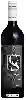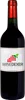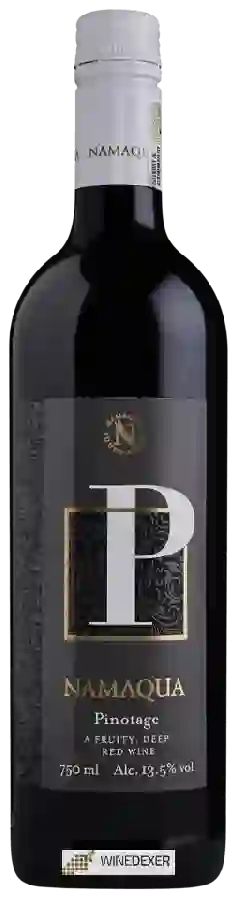
Winery NamaquaPinotage
 Red wine



In the mouth this red wine is a powerful with a lot of tannins present in the mouth.
This wine generally goes well with poultry, beef or game (deer, venison).

Taste structure of the Pinotage from the Winery Namaqua
Light | Bold | |
Smooth | Tannic | |
Dry | Sweet | |
Soft | Acidic |
In the mouth the Pinotage of Winery Namaqua in the region of Western Cape is a powerful with a lot of tannins present in the mouth.
Wine flavors and olphactive analysis



On the nose the Pinotage of Winery Namaqua in the region of Western Cape often reveals types of flavors of non oak, earth or oak and sometimes also flavors of red fruit, black fruit.
Food and wine pairings with Pinotage
Pairings that work perfectly with Pinotage



Original food and wine pairings with Pinotage
The Pinotage of Winery Namaqua matches generally quite well with dishes of beef, game (deer, venison) or poultry such as recipes of beef lark, duck breast in a crust or chicken ballotine with ham and mushrooms.
Details and technical informations about Winery Namaqua's Pinotage.
Discover the grape variety: Pinotage
Intensely coloured, structured reds with inky robe and firm tannins, with typical aromas of blackberry, black plum, roasted coffee, cocoa, banana and characteristic smoky notes. Made as powerful ageing reds and as more approachable fruity cuvées, sometimes as rosés. Absolute signature of South Africa (Stellenbosch, Swartland, Paarl). Cross of pinot noir × cinsault created in 1925 by Abraham Perold at Stellenbosch University.
Last vintages of this wine
The best vintages of Pinotage from Winery Namaqua are 2019, 2018, 2017, 2012 and 0.
Informations about the Winery Namaqua
The Winery Namaqua is one of of the world's greatest estates. It offers 33 wines for sale in the of Western Cape to come and discover on site or to buy online.

The wine region of Western Cape
Cradle of South African wine. Signature Chenin Blanc (Steen, 20%) in ample, fresh whites with notes of quince, yellow apple, honey and acacia flower, from crisp dry to sweet. Sharp, iodised Sauvignon Blanc (Walker Bay, Constantia), balanced Chardonnay. Reds: emblematic Pinotage with roasted aromas (coffee, plum, smoke), firm Cabernet Sauvignon, spicy Syrah.
The word of the wine: Malolactic fermentation
Called second fermentation or malo for short. It is the degradation (under the effect of bacteria) of the malic acid naturally present in the wine into milder, less aggressive lactic acid. Some producers or wineries refuse this operation by "blocking the malo" (by cold and adding SO2) to keep a maximum of acidity which carries the aromas and accentuates the sensation of freshness.