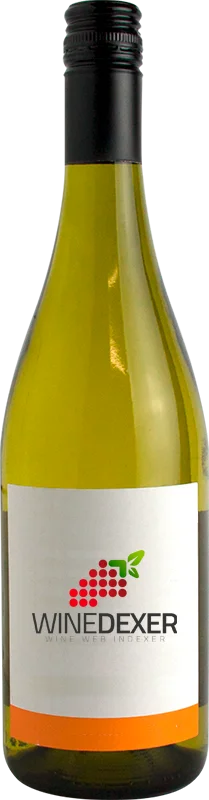
Winery Quinta do MondegoMondeco Branco
 White wine



In the mouth this white wine is a with a nice freshness.
This wine generally goes well with appetizers and snacks, lean fish or shellfish.

Taste structure of the Mondeco Branco from the Winery Quinta do Mondego
Light | Bold | |
Dry | Sweet | |
Soft | Acidic |
In the mouth the Mondeco Branco of Winery Quinta do Mondego in the region of Beiras is a with a nice freshness.
Wine flavors and olphactive analysis

On the nose the Mondeco Branco of Winery Quinta do Mondego in the region of Beiras often reveals types of flavors of earth, tree fruit or citrus fruit.
Food and wine pairings with Mondeco Branco
Pairings that work perfectly with Mondeco Branco



Original food and wine pairings with Mondeco Branco

The Mondeco Branco of Winery Quinta do Mondego matches generally quite well with dishes of shellfish, appetizers and snacks or lean fish such as recipes of soy and shrimp noodles, palm trees for the aperitif! or mongolian pot.
Details and technical informations about Winery Quinta do Mondego's Mondeco Branco.
Discover the grape variety: Reine des vignes
Table grape with medium clusters and golden berries with thin skin and aromatic muscat flesh, featuring a characteristic aromatic sweet flavour (rose, fresh grape, muscat). Very early-ripening. Grown mainly in central Europe (Hungary, Italy) and France for fresh consumption, a signature aromatic summer table grape on market stalls. French aromatic white table grape variety, obtained by early-ripening and muscat crossing for fresh consumption.
Last vintages of this wine
The best vintages of Mondeco Branco from Winery Quinta do Mondego are 2017, 2016, 2013, 0 and 2012.
Informations about the Winery Quinta do Mondego
The Winery Quinta do Mondego is one of of the world's greatest estates. It offers 13 wines for sale in the of Dão to come and discover on site or to buy online.

The wine region of Dão
"Burgundy of Portugal": elegance and finesse at altitude. Signature Touriga Nacional as red: deep and perfumed with signature notes of violet, blackberry, black cherry, bergamot and pine resin, fine tannins and freshness drawn taut. Blended with fruity Alfrocheiro, supple Jaen (Mencía) and structured Tinta Roriz. Encruzado whites, a Portuguese reference: ample and mineral (pear, honey, hazelnut, age-worthy).
The wine region of Beiras
Vast region of north-central Portugal, a fragmented mosaic of distinct sub-regions. In the west, Bairrada makes dense Baga reds with notes of black cherry, blackberry and leather, firm tannins — the base of the great Portuguese sparkling wines. In the centre, Dao produces fine Touriga Nacional reds (violet, raspberry, spice) and elegant Encruzado whites (flowers, citrus, butter). To the continental east, fleshy Touriga of Beira Interior and aromatic Fernao Pires.
The word of the wine: Old vines
There are no specific regulations governing the term "vieilles vignes". After 20 to 25 years, the yields stabilize and tend to decrease, the vines are deeply rooted, and the grapes that come from them give richer, more concentrated, more sappy wines, expressing with more nuance the characteristics of their terroir. It is possible to find plots of vines that claim to be a century old.