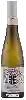
Winery Müller-CatoirHaardter Bürgergarten Rieslaner Beerenauslese
 Sweet wine


This wine generally goes well with pork, poultry or shellfish.
Food and wine pairings with Haardter Bürgergarten Rieslaner Beerenauslese
Pairings that work perfectly with Haardter Bürgergarten Rieslaner Beerenauslese



Original food and wine pairings with Haardter Bürgergarten Rieslaner Beerenauslese


The Haardter Bürgergarten Rieslaner Beerenauslese of Winery Müller-Catoir matches generally quite well with dishes of pork, shellfish or spicy food such as recipes of pork roll with mustard, fish pot or rigatoni with courgettes and tomatoes.
Details and technical informations about Winery Müller-Catoir's Haardter Bürgergarten Rieslaner Beerenauslese.
Discover the grape variety: Pinella blanca
A very old grape variety that has been cultivated for a very long time in Italy - where it originated - and that can still be found today in the Veneto region. It is also known in Slovenia and Bulgaria, but is virtually unknown in France. According to genetic analysis, it is related to the white gouais, which it resembles somewhat. There is a Pinella nera, but it is not clear whether it is the black form.
Last vintages of this wine
The best vintages of Haardter Bürgergarten Rieslaner Beerenauslese from Winery Müller-Catoir are 0
Informations about the Winery Müller-Catoir
The Winery Müller-Catoir is one of of the world's great estates. It offers 88 wines for sale in the of Pfalz to come and discover on site or to buy online.

The wine region of Pfalz
Pfalz is a key wine producing region in western Germany, located between the Rhein/Rhine river and the low-lying Haardt mountain range (a natural continuation of the Alsatian Vosges). It covers a rectangle of land 45 miles (75km) Long and 15 miles (25km) wide. To the NorthLiesRheinhessen; to the South, the French border and Alsace. In terms of both quality and quantity, Pfalz is one of Germany's most important regions, and one which shows great promise for the future.
The word of the wine: Basic wine
Dry, still wine intended for the production of sparkling wines (champagne, crémants, etc.). The basic wines undergo a second fermentation in the bottle for the production of carbon dioxide, and therefore of bubbles.