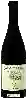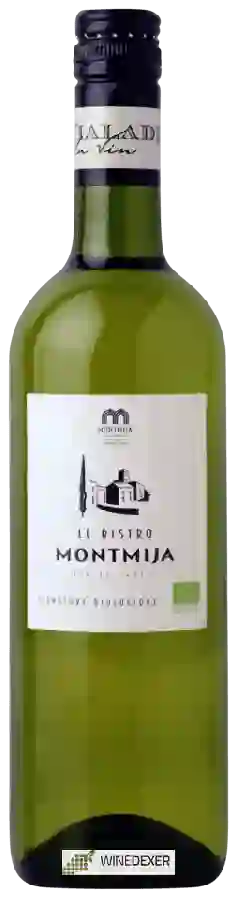
Winery MontmijaLe Bistro Blanc
 White wine


In the mouth this white wine is a .
This wine generally goes well with vegetarian, poultry or lean fish.
Taste structure of the Le Bistro Blanc from the Winery Montmija
Light | Bold | |
Dry | Sweet | |
Soft | Acidic |
In the mouth the Le Bistro Blanc of Winery Montmija in the region of Languedoc-Roussillon is a .
Food and wine pairings with Le Bistro Blanc
Pairings that work perfectly with Le Bistro Blanc



Original food and wine pairings with Le Bistro Blanc


The Le Bistro Blanc of Winery Montmija matches generally quite well with dishes of pasta, vegetarian or poultry such as recipes of cannelloni with salmon and spinach, spinach and goat cheese quiche or ravioli with 2 cheeses.
Details and technical informations about Winery Montmija's Le Bistro Blanc.
Discover the grape variety: Primitivo
From Croatia where it is called crljenak kastelanski or pribidrag. According to genetic analyses carried out by Professor Carole Meredith of California University in Davis (United States), it is related to the Croatian plavac mali and Zinfandel. It is also found in South Africa, New Zealand, Chile, Brazil, Germany, Bulgaria, Albania, Italy under the name of Primitivo, Malta, Greece, Portugal and to some extent in Croatia. In the United States (California), it is one of the most widely planted grape varieties, having been introduced in the 1830s well before Primitivo. In France, it is registered in the official catalogue of vine varieties on the A1 list under the name Primitivo.
Last vintages of this wine
The best vintages of Le Bistro Blanc from Winery Montmija are 2014
Informations about the Winery Montmija
The Winery Montmija is one of of the world's great estates. It offers 23 wines for sale in the of Languedoc-Roussillon to come and discover on site or to buy online.

The wine region of Languedoc-Roussillon
Languedoc (formerly Coteaux du Languedoc) is a key appellation used in the Languedoc-Roussillon wine region of southern France. It covers Dry table wines of all three colors (red, white and rosé) from the entire region, but leaves Sweet and Sparkling wines to other more specialized appellations. About 75% of all Languedoc wines are red, with the remaining 25% split roughly down the middle between whites and rosés. The appellation covers most of the Languedoc region and almost a third of all the vineyards in France.
The word of the wine: Pulp
Fleshy and juicy part of the grape berry, it contains sugars, organic acids and various nitrogenous and mineral compounds.