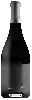
Winery MontecapponeEcuba
 wine
wine
This wine generally goes well with
The Ecuba of the Winery Montecappone is in the top 0 of wines of Rosso Piceno.
Details and technical informations about Winery Montecappone's Ecuba.
Discover the grape variety: Maréchal Foch
Maréchal Foch noir is a grape variety that originated in France (Alsace). It is a variety resulting from a cross of the same species (interspecific hybridization). It produces a variety of grape specially used for wine making. It is rare to find this grape to eat on our tables. This variety of grape is characterized by small bunches and small grapes. The Maréchal Foch noir can be found cultivated in these vineyards: Provence & Corsica, Rhône Valley, Languedoc & Roussillon.
Informations about the Winery Montecappone
The Winery Montecappone is one of of the world's great estates. It offers 31 wines for sale in the of Rosso Piceno to come and discover on site or to buy online.

The wine region of Rosso Piceno
The wine region of Rosso Piceno is located in the region of Marches of Italy. Wineries and vineyards like the Domaine Le Caniette or the Domaine Le Canà produce mainly wines red, white and sparkling. The most planted grape varieties in the region of Rosso Piceno are Sangiovese, Cabernet-Sauvignon and Merlot, they are then used in wines in blends or as a single variety. On the nose of Rosso Piceno often reveals types of flavors of cherry, violet or almonds and sometimes also flavors of dark fruit, earth or vegetal.
The wine region of Marche
Marche (or Le Marche; pronounced Mar-kay) is a region in eastern CentralItaly. It is most associated with white wines made from Trebbiano and Verdicchio grapes. Marche occupies a roughly triangular area. Its longer sides are formed by the Apennine Mountains to the west and the Adriatic Sea to the east.
The word of the wine: Reassembly
During the vinification process, a "cap" is formed at the top of the vats with the solid parts (skin, pulp, pips, etc.), which contain tannins and colouring elements. Pumping over consists of emptying the vat from the bottom and pouring the juice back to the top, in order to mix the cap and the juice and to favour the exchange and the extraction. This old technique allows a better exchange between the solid parts and the liquid.