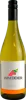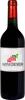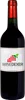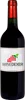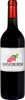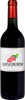
Winery Monte NobileRiserva
 Red wine


In the mouth this red wine is a powerful.
This wine generally goes well with beef, lamb or pasta.
Taste structure of the Riserva from the Winery Monte Nobile
Light | Bold | |
Smooth | Tannic | |
Dry | Sweet | |
Soft | Acidic |
In the mouth the Riserva of Winery Monte Nobile in the region of Puglia is a powerful.
Food and wine pairings with Riserva
Pairings that work perfectly with Riserva



Original food and wine pairings with Riserva
The Riserva of Winery Monte Nobile matches generally quite well with dishes of beef, pasta or lamb such as recipes of slow-cooked fillet of beef, spaghetti with summer vegetables or lamb tagine with onions, purple olives and lemons....
Details and technical informations about Winery Monte Nobile's Riserva.
Discover the grape variety: Petit Meslier
Petit Meslier blanc is a grape variety that originated in France (Champagne). It produces a variety of grape specially used for wine making. It is rare to find this grape to eat on our tables. This variety of grape is characterized by small to medium sized bunches, and medium sized grapes. Petit Meslier blanc can be found in many vineyards: South West, Cognac, Bordeaux, Champagne, Jura, Provence & Corsica, Rhone Valley, Loire Valley, Savoie & Bugey, Beaujolais.
Last vintages of this wine

The best vintages of Riserva from Winery Monte Nobile are 0, 2012
Informations about the Winery Monte Nobile
The Winery Monte Nobile is one of of the world's greatest estates. It offers 3 wines for sale in the of Puglia to come and discover on site or to buy online.

The wine region of Puglia
Puglia (Apulia to many English speakers) is a Long, slender wine region in the extreme Southeast corner of Italy's "boot". To use the shoe analogy often used to illustrate the shape of Italy, Apulia extends from the tip of the heel to the mid-calf, where the spur of the Gargano Peninsula juts out into the Adriatic Sea. The heel (the Salento peninsula) occupies the southern half of the region and is of great importance for the identity of Puglia. Not only are there cultural and geographical differences from Northern Puglia, but the wines are also different.
The word of the wine: Paste
Characteristic of a thick and heavy wine with sticky tannins.