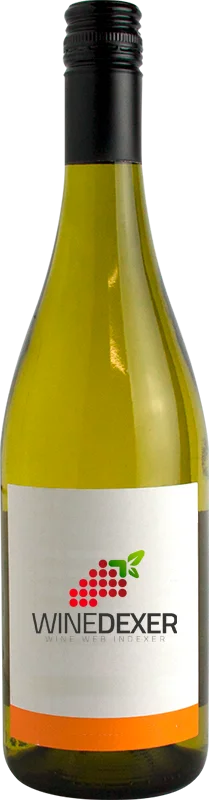
Winery MoncaroPasserina Organic
 White wine


In the mouth this white wine is a powerful with a nice freshness.
This wine generally goes well with vegetarian, appetizers and snacks or lean fish.
Taste structure of the Passerina Organic from the Winery Moncaro
Light | Bold | |
Dry | Sweet | |
Soft | Acidic |
In the mouth the Passerina Organic of Winery Moncaro in the region of Abruzzo is a powerful with a nice freshness.
Food and wine pairings with Passerina Organic
Pairings that work perfectly with Passerina Organic



Original food and wine pairings with Passerina Organic


The Passerina Organic of Winery Moncaro matches generally quite well with dishes of pasta, vegetarian or appetizers and snacks such as recipes of pasta with avocado, goat cheese and bacon quiche or beetroot and cream cheese verrines.
Details and technical informations about Winery Moncaro's Passerina Organic.
Discover the grape variety: Nielluccio
The black Nielluccio is a grape variety originating from Italy. It produces a variety of grape specially used for the elaboration of wine. It is rare to find this grape to eat on our tables. The black Nielluccio can be found in several vineyards: Provence & Corsica, South-West, Cognac, Bordeaux, Languedoc & Roussillon, Rhone Valley, Loire Valley, Savoie & Bugey, Beaujolais.
Last vintages of this wine

The best vintages of Passerina Organic from Winery Moncaro are 2018, 0
Informations about the Winery Moncaro
The Winery Moncaro is one of of the world's great estates. It offers 96 wines for sale in the of Abruzzo to come and discover on site or to buy online.

The wine region of Abruzzo
Abruzzo is an Italian wine region located on the eastern (Adriatic) coast. Its immediate neighbors in CentralItaly are Marche to the North, Lazio to the west and southwest and Molise to the southeast. Abruzzo has one DOCG - Montepulciano d'Abruzzo Colline Teramane - and three DOC wine appellations. The reds and Cerasuolo d'Abruzzo and Montepulciano d'Abruzzo, as well as the white wine appellation Trebbiano d'Abruzzo are the most notable, followed by the lesser-known Controguerra.
The word of the wine: Residual sugars
Sugars not transformed into alcohol and naturally present in the wine. The perception of residual sugars is conditioned by the acidity of the wine. The more acidic the wine is, the less sweet it will seem, given the same amount of sugar.