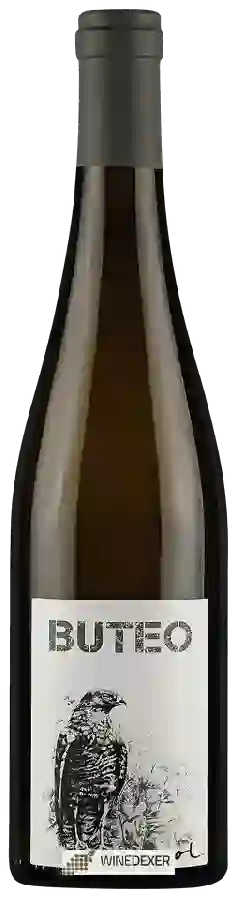
Winery Michael GindlButeo
 White wine



This wine generally goes well with pork, vegetarian or lean fish.

Wine flavors and olphactive analysis






On the nose the Buteo of Winery Michael Gindl in the region of Weinland often reveals types of flavors of non oak, earth or microbio and sometimes also flavors of vegetal, oak or tree fruit.
Food and wine pairings with Buteo
Pairings that work perfectly with Buteo



Original food and wine pairings with Buteo



The Buteo of Winery Michael Gindl matches generally quite well with dishes of pork, rich fish (salmon, tuna etc) or shellfish such as recipes of tartiflette, tuna with tomatoes in the oven or giant paella cooked on a wood fire.
Details and technical informations about Winery Michael Gindl's Buteo.
Discover the grape variety: Amaral
Light, acidic reds best drunk young, with a sustained ruby robe, silky tannins and a lively palate showing fresh red fruits (cherry, raspberry), inky notes and a herbaceous hint. Crisp and refreshing. Often blended with Vinhão and Espadeiro, contributing to the bright profile of Vinho Verde tinto DOC. Native Portuguese black grape grown mainly in the Vinho Verde region of north-west Portugal.
Last vintages of this wine
The best vintages of Buteo from Winery Michael Gindl are 2011, 2018, 2017, 2013 and 2012.
Informations about the Winery Michael Gindl
The Winery Michael Gindl is one of of the world's greatest estates. It offers 17 wines for sale in the of Weinviertel to come and discover on site or to buy online.

The wine region of Weinviertel
Largest Austrian region (>50% of national Grüner Veltliner): signature white king as dry, light DAC with notes of citrus (lemon, grapefruit), green apple, stone fruits and the peppery "Pfefferl" signature (rotundone), lively acidity and a spicy finish — a straight aperitif. Lively Riesling, Welschriesling and Pinot Blanc to complete it. A few fruity Zweigelt reds. Vast Lower Austria plateau north of Vienna, continental climate, loess and limestone.
The wine region of Weinland
Vast German-speaking region in north-eastern Switzerland, the country's largest production area. Signature Pinot Noir (Blauburgunder): fine, fresh reds with notes of cherry, raspberry, undergrowth and sweet spices, silky tannins. Elegant, delicate style, often barrel-aged. Also light, floral Müller-Thurgau (Riesling-Sylvaner), lively, lemony native Räuschling, ample Pinot Gris.
The word of the wine: Stirring (champagne)
Manual operation (on a "desk") or mechanical (with a "gyropalette") which allows the deposit created by the yeasts (see tirage) to go down to the neck of the bottle for disgorging.