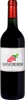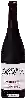
Winery Mas JaumeTautavel Côtes du Roussillon Villages
 Red wine


In the mouth this red wine is a powerful with a nice balance between acidity and tannins.
This wine generally goes well with beef, veal or pasta.
Taste structure of the Tautavel Côtes du Roussillon Villages from the Winery Mas Jaume
Light | Bold | |
Smooth | Tannic | |
Dry | Sweet | |
Soft | Acidic |
In the mouth the Tautavel Côtes du Roussillon Villages of Winery Mas Jaume in the region of Languedoc-Roussillon is a powerful with a nice balance between acidity and tannins.
Food and wine pairings with Tautavel Côtes du Roussillon Villages
Pairings that work perfectly with Tautavel Côtes du Roussillon Villages



Original food and wine pairings with Tautavel Côtes du Roussillon Villages
The Tautavel Côtes du Roussillon Villages of Winery Mas Jaume matches generally quite well with dishes of beef, pasta or veal such as recipes of autumn beef bourguignon, bean soup and spaghetti (traditional andalusian dish) or veal chops au gratin.
Details and technical informations about Winery Mas Jaume's Tautavel Côtes du Roussillon Villages.
Discover the grape variety: Cornalin d'Aoste
It is a variety of Valle d'Aosta origin and, like Arvine, it is also found in Italy. In the past, it was cultivated in Savoy and registered in the official catalogue of wine grape varieties, list B, under the name of red humagne, but it is not related to white humagne. According to recent genetic analyses, the Swiss variety Cornalin du Valais is its father and Rèze its grandmother. It is also the grandson of the petit rouge d' Aoste.
Last vintages of this wine
The best vintages of Tautavel Côtes du Roussillon Villages from Winery Mas Jaume are 2011
Informations about the Winery Mas Jaume
The Winery Mas Jaume is one of of the world's greatest estates. It offers 8 wines for sale in the of Côtes du Roussillon Villages to come and discover on site or to buy online.

The wine region of Côtes du Roussillon Villages
The wine region of Côtes du Roussillon Villages is located in the region of Côtes du Roussillon of Languedoc-Roussillon of France. Wineries and vineyards like the Domaine du Clos des Fées or the Domaine de Rombeau produce mainly wines red, white and pink. The most planted grape varieties in the region of Côtes du Roussillon Villages are Mourvèdre, Lledoner pelut and Pinot noir, they are then used in wines in blends or as a single variety. On the nose of Côtes du Roussillon Villages often reveals types of flavors of cherry, anise or black plum and sometimes also flavors of citrus fruit, tree fruit or fennel.
The wine region of Languedoc-Roussillon
Languedoc (formerly Coteaux du Languedoc) is a key appellation used in the Languedoc-Roussillon wine region of southern France. It covers Dry table wines of all three colors (red, white and rosé) from the entire region, but leaves Sweet and Sparkling wines to other more specialized appellations. About 75% of all Languedoc wines are red, with the remaining 25% split roughly down the middle between whites and rosés. The appellation covers most of the Languedoc region and almost a third of all the vineyards in France.
The word of the wine: Local wine
Table wine, but with the origin indicated. It corresponds to a particular legislation: the freedom to use grape varieties is greater than for the AOC, but the quality criteria such as the approval tastings can sometimes be more demanding. The legislation is still evolving, but for the moment there are three levels: regional (e.g. Vin de Pays d'Oc), departmental and local (e.g. Côtes de Thongue).