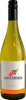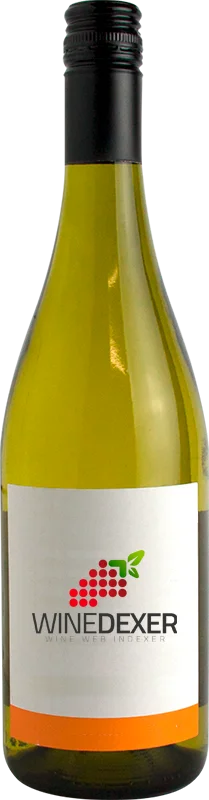
Maison FrancoisBordeaux Blanc
 White wine


In the mouth this white wine is a powerful.
This wine generally goes well with pork, vegetarian or poultry.
Taste structure of the Bordeaux Blanc from the Maison Francois
Light | Bold | |
Dry | Sweet | |
Soft | Acidic |
In the mouth the Bordeaux Blanc of Maison Francois in the region of Bordeaux is a powerful.
Food and wine pairings with Bordeaux Blanc
Pairings that work perfectly with Bordeaux Blanc



Original food and wine pairings with Bordeaux Blanc


The Bordeaux Blanc of Maison Francois matches generally quite well with dishes of pork, vegetarian or poultry such as recipes of roast pork orloff, ham and comté quiche or zucchini and goat cheese quiche.
Details and technical informations about Maison Francois's Bordeaux Blanc.
Discover the grape variety: Jaoumet
Its origin is uncertain, but it is thought to have been introduced into the Agly valley by a Trappist monk in the mid-19th century. Jaoumet is practically unknown in other French table grape-producing regions, although it is listed in the Official Catalogue of Table Grape Varieties, list A1.
Last vintages of this wine
The best vintages of Bordeaux Blanc from Maison Francois are 2018
Informations about the Maison Francois
The Maison Francois is one of of the world's greatest estates. It offers 12 wines for sale in the of Bordeaux to come and discover on site or to buy online.

The wine region of Bordeaux
Bordeaux, in southwestern France, is one of the most famous, prestigious and prolific wine regions in the world. The majority of Bordeaux wines (nearly 90% of the production Volume) are the Dry, medium and Full-bodied red Bordeaux blends for which it is famous. The finest (and most expensive) are the wines of the great châteaux of Haut-Médoc and the right bank appellations of Saint-Émilion and Pomerol. The former focuses (at the highest level) on Cabernet Sauvignon, the latter on Merlot.
The word of the wine: Maturing (champagne)
After riddling, the bottles are stored on "point", upside down, with the neck of one bottle in the bottom of the other. The duration of this maturation is very important: in contact with the dead yeasts, the wine takes on subtle aromas and gains in roundness and fatness. A brut without year must remain at least 15 months in the cellar after bottling, a vintage 36 months.