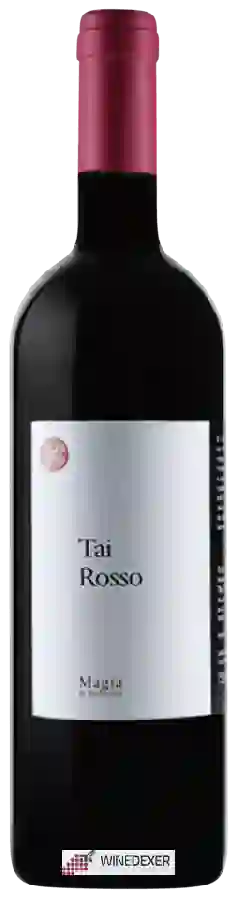
Winery Magia di BarbaranoTai Rosso
 Red wine



In the mouth this red wine is a powerful.
This wine generally goes well with beef, game (deer, venison) or lamb.

Taste structure of the Tai Rosso from the Winery Magia di Barbarano
Light | Bold | |
Smooth | Tannic | |
Dry | Sweet | |
Soft | Acidic |
In the mouth the Tai Rosso of Winery Magia di Barbarano in the region of Veneto is a powerful.
Food and wine pairings with Tai Rosso
Pairings that work perfectly with Tai Rosso



Original food and wine pairings with Tai Rosso

The Tai Rosso of Winery Magia di Barbarano matches generally quite well with dishes of beef, pasta or lamb such as recipes of spit-turned boar leg (oven) with "automatic watering"., spaghetti with knackis or tajine with 2 meats and preserved lemons.
Details and technical informations about Winery Magia di Barbarano's Tai Rosso.
Discover the grape variety: Dattier de Saint Vallier
Table grape with long bunches and elongated golden berries, thin skin and crisp flesh, pleasant sweet flavour. Rarely vinified. Grown for fresh consumption in south-east France and Spain, valued for its attractive appearance, pleasant taste and good cold-storage life. French white table grape variety obtained in 1922 at Saint-Vallier (Drôme), a cross of chasselas × dattier de Beyrouth.
Last vintages of this wine
The best vintages of Tai Rosso from Winery Magia di Barbarano are 0
Informations about the Winery Magia di Barbarano
The Winery Magia di Barbarano is one of of the world's greatest estates. It offers 10 wines for sale in the of Veneto to come and discover on site or to buy online.

The wine region of Veneto
World star of Prosecco: fresh, light Glera sparklers with notes of pear, green apple and white flowers, fruity, convivial bubbles. Veronese reds from Corvina and Rondinella: light, crisp Bardolino, fruity Valpolicella, opulent, concentrated Amarone DOCG (black cherry, chocolate, raisin) from dried grapes. Mineral, almondy Soave (Garganega) whites, fresh Pinot Grigio. 97,500 ha, Italy's largest production.
The word of the wine: Tertiary aromas
Aromas resulting from the aging of the wine in the bottle. The aromas evolve with time, from fresh fruitiness to notes of stewed, candied or dried fruit, to aromas of venison or undergrowth.


