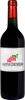
Domaine MadelocCollioure Cuvée Arrels
 Red wine
In the mouth this red wine is a powerful with a nice balance between acidity and tannins.
This wine generally goes well with beef, veal or pasta.
Taste structure of the Collioure Cuvée Arrels from the Domaine Madeloc
Light | Bold | |
Smooth | Tannic | |
Dry | Sweet | |
Soft | Acidic |
In the mouth the Collioure Cuvée Arrels of Domaine Madeloc in the region of Languedoc-Roussillon is a powerful with a nice balance between acidity and tannins.
Food and wine pairings with Collioure Cuvée Arrels
Pairings that work perfectly with Collioure Cuvée Arrels



Original food and wine pairings with Collioure Cuvée Arrels
The Collioure Cuvée Arrels of Domaine Madeloc matches generally quite well with dishes of beef, pasta or veal such as recipes of monkfish with vegetable tagliatelle, pasta with crispy parma ham or cutlets with portuguese sauce.
Details and technical informations about Domaine Madeloc's Collioure Cuvée Arrels.
Discover the grape variety: Ortega
An intraspecific cross between Müller-Thurgau and Siegerrebe obtained in 1948 by Hans Breider (1908-1960) at the Bavarian Research Station for Viticulture and Horticulture in Veitsnöchheim (Germany). Almost unknown in France, it can be found in Germany, Belgium, England, the United States and Canada. Its early maturity and muscatel taste have sometimes led to it being offered as a table grape on market stalls.
Informations about the Domaine Madeloc
The Domaine Madeloc is one of of the world's great estates. It offers 16 wines for sale in the of Collioure to come and discover on site or to buy online.

The wine region of Collioure
Collioure is a very small appellation in the Roussillon region (also known as French Catalonia) in southeastern France, near the border with Spain on the Mediterranean coast, about 30 kilometers southwest of Perpignan. It produces PowerfulDry red and white wines from France's southernmost Vineyard. The appellation comprises four communes, including the one from which it takes its name, plus Cerbère, Port-Vendres and Banyuls. Collioure wines are the dry table wines of the region, while those bearing the name Banyuls are the Sweet wines produced in exactly the same vineyards.
The wine region of Languedoc-Roussillon
Languedoc (formerly Coteaux du Languedoc) is a key appellation used in the Languedoc-Roussillon wine region of southern France. It covers Dry table wines of all three colors (red, white and rosé) from the entire region, but leaves Sweet and Sparkling wines to other more specialized appellations. About 75% of all Languedoc wines are red, with the remaining 25% split roughly down the middle between whites and rosés. The appellation covers most of the Languedoc region and almost a third of all the vineyards in France.
The word of the wine: Presses
The juice that results from pressing the grapes after fermentation. At the end of the maceration, the vats are emptied, the first juice obtained is called the free-run wine and the marc remaining at the bottom of the vat is then pressed to give the press wine. We say more quickly "the presses". Their quality varies according to the vintage and the maceration. A too vigorous extraction releases the tannins of pips and the wine of press can then prove to be very astringent. Often the winemaker raises it separately, deciding later whether or not to incorporate it totally or partially into the grand vin.