The Domaine Louis Magnin of Vin de Savoie of Savoie
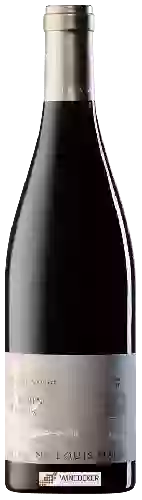
The Domaine Louis Magnin is one of the largest wineries in the world. It offers 15 wines for sale in of Vin de Savoie to come and discover on site or to buy online.
Looking for the best Domaine Louis Magnin wines in Vin de Savoie among all the wines in the region? Check out our tops of the best red, white or effervescent Domaine Louis Magnin wines. Also find some food and wine pairings that may be suitable with the wines from this area. Learn more about the region and the Domaine Louis Magnin wines with technical and enological descriptions.
How Domaine Louis Magnin wines pair with each other generally quite well with dishes of beef, game (deer, venison) or mature and hard cheese such as recipes of tanjia, roast deer my grandmother's way or mashed potatoes with spinach and 2 salmon.
On the nose the red wine of Domaine Louis Magnin. often reveals types of flavors of cherry, pepper or earth and sometimes also flavors of oak, spices or red fruit.
Vin de Savoie (often written simply as "Savoie") is the main appellation of the Savoie region in the far east of France. This mountainous region located west of the Alps has distinctive wine styles that are rarely seen outside their territory of origin. Most are Dry white wines made from the Altesse, Jacquère and Chasselas grapes. Savoy wines are often described as distinctly "alpine", citing their fresh, Mineral characteristics.
The AOC Vin de Savoie was created in 1973, along with the appellation Roussette de Savoie, which covers the region's Altesse grape wines. Wines labelled simply as Savoie or Vin de Savoie, without an associated cru name, can be white, red, rosé and even Sparkling. White wines are dominated by the most common grape variety in Savoie, Jacquere, but may also contain Chardonnay, Aligote, Mondeuse Blanche, Veltliner Rouge Precoce, Chasselas, Gringet and Altesse. To complicate matters, Marsanne and Verdesse are also allowed, but only in the administrative department of Isère.
However, this represents only a tiny fraction of the appellation's surface area.
How Domaine Louis Magnin wines pair with each other generally quite well with dishes such as recipes .
Roussane is a white grape variety, planted on an area of more than 700 ha. Originally from Montélimar, it is also found in Savoie, Languedoc and Roussillon, and grows very well in calcareous, poor, stony soil. It prefers to be pruned short. Roussane is also called fromenteau, barbin or bergeron. The young leaves are bubbled with fine down. When adult, they become thicker. It flowers in June and matures in mid-September. The grapes are cylindrical in shape, the berries are small and turn red when ripe, and the wine produced from pure Roussane is of extraordinary quality. It has a delicate aroma reminiscent of coffee, honeysuckle, iris and peony. The taste of this wine improves with age. It is part of the blend of the appellations Vin-de-Savoie, Côtes-du-Vallée du Rhône or Châteauneuf-du-Pape.
How Domaine Louis Magnin wines pair with each other generally quite well with dishes such as recipes .
On the nose the white wine of Domaine Louis Magnin. often reveals types of flavors of oaky, peach or apricot and sometimes also flavors of honey, earth or microbio.
In Burgundy, the fourth and final level of classification (above the regional, communal and premier cru appellations), designating the wines produced on delimited plots of land (the climats) whose name alone constitutes the appellation. The climats classified as Grand Cru are 32 in the Côte d'Or plus one in Chablis which is divided into 7 distinct climats. Representing barely 1.5% of the production, the Grand Crus are the aristocracy of Burgundy wines.
Planning a wine route in the of Vin de Savoie? Here are the wineries to visit and the winemakers to meet during your trip in search of wines similar to Domaine Louis Magnin.
The Altesse white grape variety is French in origin, but its ancestors were brought from Cyprus. It then developed in the vineyards of the southeast of the country. The Montagnieu fusette or arbane, as it is also called, buds early in the year. A cottony veil covers the first buds. The involuted blade and the U-shaped petiolar sinus distinguish the adult, three-lobed leaves. During, sometimes for late vengeance, the clusters of medium or small size are winged, compact and cylindrical.the fruits reveal a melting pulp under a film of variable color. The pink-tan colour replaces the early reddish yellow when the berries ripen. If they persist, the berries take on a lilac hue. The vinification promises sparkling, aromatic and elegant sweet whites, or dry whites. Altesse is a grape variety to be carefully maintained against acariosis and erinosis.