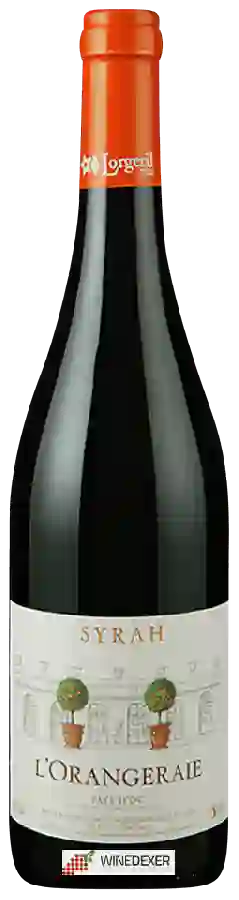
Winery L'OrangeraieSyrah
 Red wine



In the mouth this red wine is a powerful with a nice balance between acidity and tannins.
This wine generally goes well with beef, veal or pasta.

Taste structure of the Syrah from the Winery L'Orangeraie
Light | Bold | |
Smooth | Tannic | |
Dry | Sweet | |
Soft | Acidic |
In the mouth the Syrah of Winery L'Orangeraie in the region of Pays d'Oc is a powerful with a nice balance between acidity and tannins.
Food and wine pairings with Syrah
Pairings that work perfectly with Syrah



Original food and wine pairings with Syrah
The Syrah of Winery L'Orangeraie matches generally quite well with dishes of beef, pasta or veal such as recipes of roasted fillet of beef with parsley, pasta with veal stock sauce or adapted vietnamese fondue.
Details and technical informations about Winery L'Orangeraie's Syrah.
Discover the grape variety: Callet
Light, elegant reds with a clear ruby robe, fine tannins and fresh acidity. Delicate aromas of red fruits (cherry, raspberry), Mediterranean herbs (rosemary, thyme), soft spices and floral notes. Airy, refreshing palate, moderate alcohol. Traditional component of Pla i Llevant DO and Binissalem DO on Majorca, often blended with Manto Negro and Fogoneu. Native Spanish variety from the Balearic Islands, emblematic of the archipelago.
Last vintages of this wine
The best vintages of Syrah from Winery L'Orangeraie are 2017, 2015, 2013
Informations about the Winery L'Orangeraie
The Winery L'Orangeraie is one of of the world's great estates. It offers 18 wines for sale in the of Pays d'Oc to come and discover on site or to buy online.

The wine region of Pays d'Oc
The single-grape IGP par excellence: modern, accessible, frank and fruity wines, the popular signature of the Midi. Spicy Syrah reds (pepper, blackberry), round Merlot, structured Cabernet, generous Grenache, supple Cinsault. Crisp, tangy rosés. Opulent Chardonnay whites, lively Sauvignon, floral, apricoty Viognier.
The word of the wine: Malolactic fermentation
Called second fermentation or malo for short. It is the degradation (under the effect of bacteria) of the malic acid naturally present in the wine into milder, less aggressive lactic acid. Some producers or wineries refuse this operation by "blocking the malo" (by cold and adding SO2) to keep a maximum of acidity which carries the aromas and accentuates the sensation of freshness.