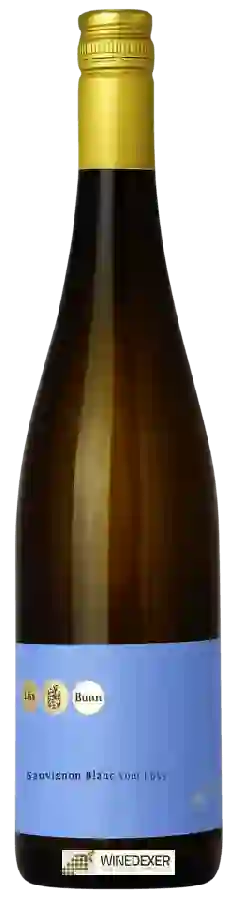
Winery Lisa BunnSauvignon Blanc vom Löss
 White wine
In the mouth this white wine is a with a nice freshness.
This wine generally goes well with vegetarian, shellfish or goat cheese.

Taste structure of the Sauvignon Blanc vom Löss from the Winery Lisa Bunn
Light | Bold | |
Dry | Sweet | |
Soft | Acidic |
In the mouth the Sauvignon Blanc vom Löss of Winery Lisa Bunn in the region of Rheinhessen is a with a nice freshness.
Food and wine pairings with Sauvignon Blanc vom Löss
Pairings that work perfectly with Sauvignon Blanc vom Löss



Original food and wine pairings with Sauvignon Blanc vom Löss
The Sauvignon Blanc vom Löss of Winery Lisa Bunn matches generally quite well with dishes of shellfish, vegetarian or goat cheese such as recipes of giant paella cooked on a wood fire, light tuna-tomato quiche (without cream) or tomato and goat cheese patties.
Details and technical informations about Winery Lisa Bunn's Sauvignon Blanc vom Löss.
Discover the grape variety: Ravat
Simple and fruity whites with a pale golden colour, a supple palate with moderate acidity and understated aromas of white fruits and hybrid notes. Productive and disease resistant. Grown in negligible quantities in France and Canada (Quebec) for continental-climate vineyards, bearing witness to the history of post-phylloxera French hybridization. Family of French hybrid varieties obtained by Jean-François Ravat in the early 20th century.
Informations about the Winery Lisa Bunn
The Winery Lisa Bunn is one of of the world's great estates. It offers 50 wines for sale in the of Rheinhessen to come and discover on site or to buy online.

The wine region of Rheinhessen
71% white region: Riesling is king (5,000 ha), dry to off-dry, ripe yellow fruit, apple, citrus and fine saline minerality. Supple, floral Müller-Thurgau for everyday, the world's largest Silvaner plantation with herbaceous, straight notes. Historic cradle of off-sweet Liebfraumilch. Some supple reds (Dornfelder, Spätburgunder).
The word of the wine: Runoff
Failure of the vine flower to fertilize at the time of flowering, when the weather is too cold or rainy. Under these conditions, the vine will have few or no clusters.








