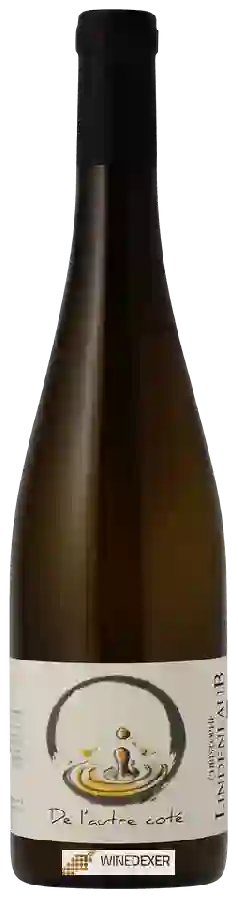
Winery LindenlaubDe l'Autre Côté
 White wine


In the mouth this white wine is a .
This wine generally goes well with

Taste structure of the De l'Autre Côté from the Winery Lindenlaub
Light | Bold | |
Dry | Sweet | |
Soft | Acidic |
In the mouth the De l'Autre Côté of Winery Lindenlaub in the region of Alsace is a .
Wine flavors and olphactive analysis



On the nose the De l'Autre Côté of Winery Lindenlaub in the region of Alsace often reveals types of flavors of earth, tree fruit or citrus fruit and sometimes also flavors of tropical fruit.
Details and technical informations about Winery Lindenlaub's De l'Autre Côté.
Discover the grape variety: Auxerrois
Rich, round whites with tender mouth and moderate acidity, featuring aromas of ripe yellow fruits, white flowers, subtle honey, fresh almond and brioche notes. Often blended with Pinot Blanc in Alsace (cuvées labelled "Pinot Blanc" often contain a good proportion) and a pillar of Crémant d'Alsace. Also in French and Luxembourgish Moselle, Côtes-de-Toul and Baden. Lorraine grape, a Pinot Noir × Gouais Blanc cross, half-sibling of Chardonnay.
Last vintages of this wine

The best vintages of De l'Autre Côté from Winery Lindenlaub are 2019, 2018, 2017, 2015 and 0.
Informations about the Winery Lindenlaub
The Winery Lindenlaub is one of of the world's greatest estates. It offers 61 wines for sale in the of Alsace to come and discover on site or to buy online.

The wine region of Alsace
Capital of great French aromatic whites, most often dry and single-varietal. Straight, mineral Riesling (lemon, gunflint), opulent, exuberant Gewurztraminer (lychee, rose, spices), round, smoky Pinot Gris, floral, crisp Muscat, supple Pinot Blanc. Fine, fruity Crémants d'Alsace, exceptional sweet Vendanges Tardives and Sélection de Grains Nobles. 15,500 ha at the foot of the Vosges on varied soils, 51 Grands Crus since 1975.
The word of the wine: Biodynamic (agriculture)
Organic agriculture is part of a vision of the world linking the plant and all living beings to the cosmos and basing work in the vineyard and the cellar on the cycles of the moon.