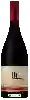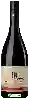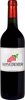
Winery LieselehofMaximilian
 Red wine



In the mouth this red wine is a powerful.
This wine generally goes well with beef, game (deer, venison) or lamb.
Taste structure of the Maximilian from the Winery Lieselehof
Light | Bold | |
Smooth | Tannic | |
Dry | Sweet | |
Soft | Acidic |
In the mouth the Maximilian of Winery Lieselehof in the region of Trentino-Alto-Adige is a powerful.
Food and wine pairings with Maximilian
Pairings that work perfectly with Maximilian



Original food and wine pairings with Maximilian

The Maximilian of Winery Lieselehof matches generally quite well with dishes of beef, pasta or lamb such as recipes of roast pork with pineapple, maultaschen ( swabian ravioli ) or mediterranean lamb necklace.
Details and technical informations about Winery Lieselehof's Maximilian.
Discover the grape variety: Cabernet-Sauvignon
Cabernet-Sauvignon noir is a grape variety that originated in France (Bordeaux). It produces a variety of grape specially used for wine making. It is rare to find this grape to eat on our tables. This variety of grape is characterized by small bunches, and small grapes. Cabernet-Sauvignon noir can be found in many vineyards: South-West, Loire Valley, Languedoc & Roussillon, Cognac, Bordeaux, Armagnac, Rhone Valley, Provence & Corsica, Savoie & Bugey, Beaujolais.
Last vintages of this wine
The best vintages of Maximilian from Winery Lieselehof are 0
Informations about the Winery Lieselehof
The Winery Lieselehof is one of of the world's greatest estates. It offers 12 wines for sale in the of Trentino-Alto-Adige to come and discover on site or to buy online.

The wine region of Trentino-Alto-Adige
Italy's northernmost alpine vineyard, two identities. Aromatic, precise whites are the stars: signature opulent Gewurztraminer (lychee, rose, spice), ample Pinot Grigio, mineral Pinot Bianco, lively high-altitude Muller-Thurgau. Native reds: dense fruity Teroldego (blackberry, violet), deep Lagrein with plum and chocolate notes, light crunchy Schiava, spicy Marzemino. Trento DOC Metodo Classico sparklers.
The word of the wine: Fumet
Older synonym for bouquet.