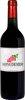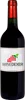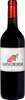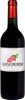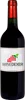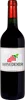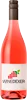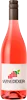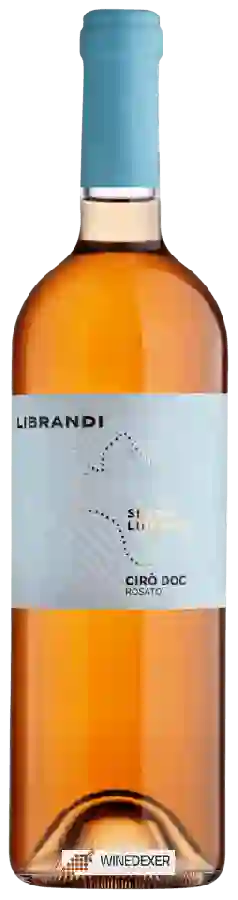
Winery LibrandiCirò Rosato (Segno)
 Pink wine



This wine is composed of 100% of the grape variety Gaglioppo.
This wine generally goes well with

Wine flavors and olphactive analysis






On the nose the Cirò Rosato (Segno) of Winery Librandi in the region of Calabria often reveals types of flavors of earth, microbio or tree fruit and sometimes also flavors of spices, citrus fruit or red fruit.
Discover the grape variety: Gaglioppo
Structured, warm reds with a ruby robe evolving towards garnet, firm tannins and moderate acidity, with aromas of black cherry preserve, plum, fig, Mediterranean herbs (oregano, rosemary), spice, leather and balsamic notes. Ample palate, good ageing. Absolute star of Cirò DOC on the Ionian coast of Calabria (one of Europe's oldest vineyards, celebrated since Antiquity). Autochthonous Calabrian variety, a natural descendant of Sangiovese × Mantonico Bianco.
Last vintages of this wine
The best vintages of Cirò Rosato (Segno) from Winery Librandi are 2019, 2014, 2008, 2017 and 2016.
Informations about the Winery Librandi
The Winery Librandi is one of of the world's great estates. It offers 30 wines for sale in the of Cirò to come and discover on site or to buy online.

The wine region of Cirò
Calabria DOC at the foot of the Sila, one of the world's oldest named wines (ancient Krimisa offered to Olympic victors). Gaglioppo signature native red: structured and sun-drenched with signature notes of black cherry, blackberry, garrigue, Mediterranean herbs, leather and spice hint, firm tannins and warm palate — garnet hue, sustained alcohol, ageworthy. Rare Greco Bianco white (citrus, flowers). Mediterranean climate, Ionian breezes.
The wine region of Calabria
Italy's far south between the Ionian and Tyrrhenian seas, a millennia-old tradition (Greek "Oenotria"). Emblematic Gaglioppo (the "black prince"): sun-drenched reds with signature notes of black cherry, candied plum, garrigue, tobacco, spice and balsamic notes, firm tannins — peaking at Ciro DOC on the Ionian coast. Also fleshy Magliocco, dense Nerello, Greco Bianco in a fresh, almondy white, ample Mantonico. Hot Mediterranean climate, volcanic and clay-sandy soils.
The word of the wine: Muscat blanc à petits grains
A white grape variety cultivated since antiquity on the shores of the Mediterranean, it is considered the noblest of the muscats. It is mainly used to make sweet wines, often from mutage. In France, it is the sole variety used in many natural sweet wines: muscat-de-frontignan, muscat-de-mireval, muscat-de-lunel, muscat-de-saint-jean-de-minervois, muscat-de-beaumes-de-venise, muscat-du-cap-corse. Combined with Muscat d'Alexandrie, it gives Muscat-de-Rivesaltes. It is also used to make sparkling white wines (clairette-de-die; moscato d'asti and asti spumante in Italy) and dry wines (alsace-muscat). Powerfully aromatic and complex, its wines evoke fresh grapes, roses, exotic fruits, citrus fruits and spices.