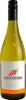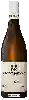
Winery Lewens LustSauvignon Blanc
 White wine
In the mouth this white wine is a with a nice freshness.
This wine generally goes well with vegetarian, shellfish or goat cheese.
Taste structure of the Sauvignon Blanc from the Winery Lewens Lust
Light | Bold | |
Dry | Sweet | |
Soft | Acidic |
In the mouth the Sauvignon Blanc of Winery Lewens Lust in the region of Western Cape is a with a nice freshness.
Food and wine pairings with Sauvignon Blanc
Pairings that work perfectly with Sauvignon Blanc



Original food and wine pairings with Sauvignon Blanc
The Sauvignon Blanc of Winery Lewens Lust matches generally quite well with dishes of shellfish, vegetarian or goat cheese such as recipes of mussels with curry, quiche without pastry or bricks fig ham goat.
Details and technical informations about Winery Lewens Lust's Sauvignon Blanc.
Discover the grape variety: Siegerrebe
An intraspecific cross between the Madeleine angevine and the Gewurztraminer obtained in 1929 by Georg Scheu at the Alzey testing station (Germany). Almost unknown in France, it can be found in Germany, Denmark, the Netherlands, Belgium, Sweden, Switzerland, England, the United States, Canada, etc.
Informations about the Winery Lewens Lust
The Winery Lewens Lust is one of of the world's greatest estates. It offers 8 wines for sale in the of Western Cape to come and discover on site or to buy online.

The wine region of Western Cape
The Western Cape is home to the vast majority of the South African wine industry, and the country's two most famous wine regions, Stellenbosch and Paarl. The city of Cape Town serves as the epicenter of the Cape Winelands, a mountainous, biologically diverse area in the south-western corner of the African continent. A wide variety of wines are produced here. Wines from the Shiraz and Pinotage">Pinotage grape varieties can be fresh and juicy or Full-bodied and gutsy.
The word of the wine: Overmaturation
When the grapes reach maturity, the skin becomes permeable and progressively loses water, which causes a concentration phenomenon inside the berry. This is called over-ripening or passerillage.