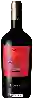
Winery LevoratoVitereto
 Red wine


In the mouth this red wine is a powerful.
This wine generally goes well with beef, game (deer, venison) or lamb.
Taste structure of the Vitereto from the Winery Levorato
Light | Bold | |
Smooth | Tannic | |
Dry | Sweet | |
Soft | Acidic |
In the mouth the Vitereto of Winery Levorato in the region of Veneto is a powerful.
Food and wine pairings with Vitereto
Pairings that work perfectly with Vitereto



Original food and wine pairings with Vitereto

The Vitereto of Winery Levorato matches generally quite well with dishes of beef, pasta or lamb such as recipes of rosbeef casserole mamie, chicken wok with chinese noodles or lamb tagine with dried fruits.
Details and technical informations about Winery Levorato's Vitereto.
Discover the grape variety: Madeleine royale
Variety obtained in 1845 by the Moreau-Robert company by crossing the frankenthal noir with the pinot blanc. It has not been propagated for a long time, which means that it is now in danger of disappearing. It is, however, listed in the Official Catalogue of Table Grape Varieties, list A1. - Synonym: Madeleine impériale, plant du caporal (all the synonyms of the grape varieties, click here!).
Last vintages of this wine

The best vintages of Vitereto from Winery Levorato are 2013, 0, 2019
Informations about the Winery Levorato
The Winery Levorato is one of of the world's greatest estates. It offers 27 wines for sale in the of Veneto to come and discover on site or to buy online.

The wine region of Veneto
Veneto is an important and growing wine region in northeastern Italy. Veneto is administratively Part of the Triveneto area, aLong with its smaller neighbors, Trentino-Alto Adige and Friuli-Venezia Giulia. In terms of geography, culture and wine styles, it represents a transition from the Alpine and Germanic-Slavic end of Italy to the warmer, drier, more Roman lands to the South. Veneto is slightly smaller than the other major Italian wine regions - Piedmont, Tuscany, Lombardy, Puglia and Sicily - but it produces more wine than any of them.
The word of the wine: Magnum
Bottle with a capacity of 1.5 litres.