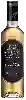
Winery Vignerons de la MéditerranéeMuscat de Saint Jean de Minervois Petit Grain
 Natural sweet wine


This wine generally goes well with spicy food and sweet desserts.


Food and wine pairings with Muscat de Saint Jean de Minervois Petit Grain
Pairings that work perfectly with Muscat de Saint Jean de Minervois Petit Grain


Original food and wine pairings with Muscat de Saint Jean de Minervois Petit Grain
The Muscat de Saint Jean de Minervois Petit Grain of Winery Vignerons de la Méditerranée matches generally quite well with dishes of spicy food or sweet desserts such as recipes of butter chicken or chicken makkhani (india) or chocolate fondant.
Details and technical informations about Winery Vignerons de la Méditerranée's Muscat de Saint Jean de Minervois Petit Grain.
Discover the grape variety: Mireille
A cross between Italia and Perle de Csaba, registered in 1972 in the Official Catalogue of cultivated table grape varieties, list A1. Mireille has been very little propagated and is therefore almost unknown in France and abroad. - Synonymy: no known synonyms (for all the synonyms of the varieties, click here!).
Last vintages of this wine
The best vintages of Muscat de Saint Jean de Minervois Petit Grain from Winery Vignerons de la Méditerranée are 2016, 2013
Informations about the Winery Vignerons de la Méditerranée
The Winery Vignerons de la Méditerranée is one of of the world's greatest estates. It offers 179 wines for sale in the of Muscat de St. Jean de Minervois to come and discover on site or to buy online.

The wine region of Muscat de St. Jean de Minervois
Muscat de Saint-Jean-de-Minervois is a Sweet, fortified, natural wine appellation from the Languedoc wine region in Southern France. The wines are based on the Muscat Blanc a Petits Grains Grape variety. Muscat de Saint-Jean-de-Minervois wines are produced using a traditional sweet winemaking process called Mutage, which involves adding Alcohol to the grape must to prematurely stop the Yeast">yeast and thus the Fermentation process. They generally have a residual sugar content of about 125 grams per litre and an alcohol content of about 15%.
The wine region of Languedoc-Roussillon
Languedoc (formerly Coteaux du Languedoc) is a key appellation used in the Languedoc-Roussillon wine region of southern France. It covers Dry table wines of all three colors (red, white and rosé) from the entire region, but leaves Sweet and Sparkling wines to other more specialized appellations. About 75% of all Languedoc wines are red, with the remaining 25% split roughly down the middle between whites and rosés. The appellation covers most of the Languedoc region and almost a third of all the vineyards in France.
The word of the wine: Interknot
Botanical term for the interval between two nodes or between two leaf insertions on a branch (see merithallus).