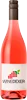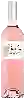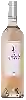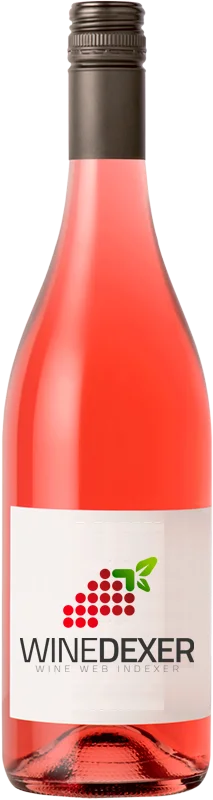
Winery Les Vignerons d'AghioneSanta Ghjulia Ile de Beauté Rosé
 Pink wine



This wine generally goes well with
Details and technical informations about Winery Les Vignerons d'Aghione's Santa Ghjulia Ile de Beauté Rosé.
Discover the grape variety: Mouyssaguès
Mouyssaguès is a grape variety that originated in the southwest of France. Today it occupies just under a hectare, whereas in the past it filled the entire Lot valley. Its adult leaves have between 7 and 9 lobes. These turn completely red in the autumn. Its blue-black berries are elliptical and short. As for its truncated cone-shaped bunches, they are of medium size. They are also compact and winged. Mouyssaguès has only one approved clone, 1.150. A dozen others have been planted in Aveyron. Mouyssaguès can bud in the middle or late, 8 to 10 days after Chasselas. It ripens early for the second time. Vigorous, it is not very sensitive to the various diseases common to these grape varieties. Although productive, it is preferable to prune it long. The mouyssaguès makes a very astringent and coloured wine. This variety can also be called negret, faroneux, rouge menu or peyregord. Because of its high yield, it is often called the poor man's vine.
Last vintages of this wine
The best vintages of Santa Ghjulia Ile de Beauté Rosé from Winery Les Vignerons d'Aghione are 2018, 2019
Informations about the Winery Les Vignerons d'Aghione
The Winery Les Vignerons d'Aghione is one of of the world's great estates. It offers 110 wines for sale in the of Ile de Beaute to come and discover on site or to buy online.

The wine region of Ile de Beaute
Ile de Beauté is the evocative PGI title given to wines that come from Corsica. The island is located in the Mediterranean Sea between the southeast coast of Provence and the west coast of Tuscany. Although the island is closer to Italy, it has been under French rule since 1764 and is one of the 27 regions of France. Corsica's Italian heritage is reflected in the island's wines, which are made primarily from Sangiovese (known here as Nielluccio) and Vermentino.
The word of the wine: Draft liquor (champagne)
After blending, the wine is bottled with a liqueur de tirage (a mixture of sugar and wine) and a yeast (selected yeasts). The yeast attacks the sugar and creates carbon dioxide. The fermentation, which lasts about two months, is prolonged by an ageing period (15 months minimum in total). The bottle is capped (some rare vintages are capped with a staple and a cork).